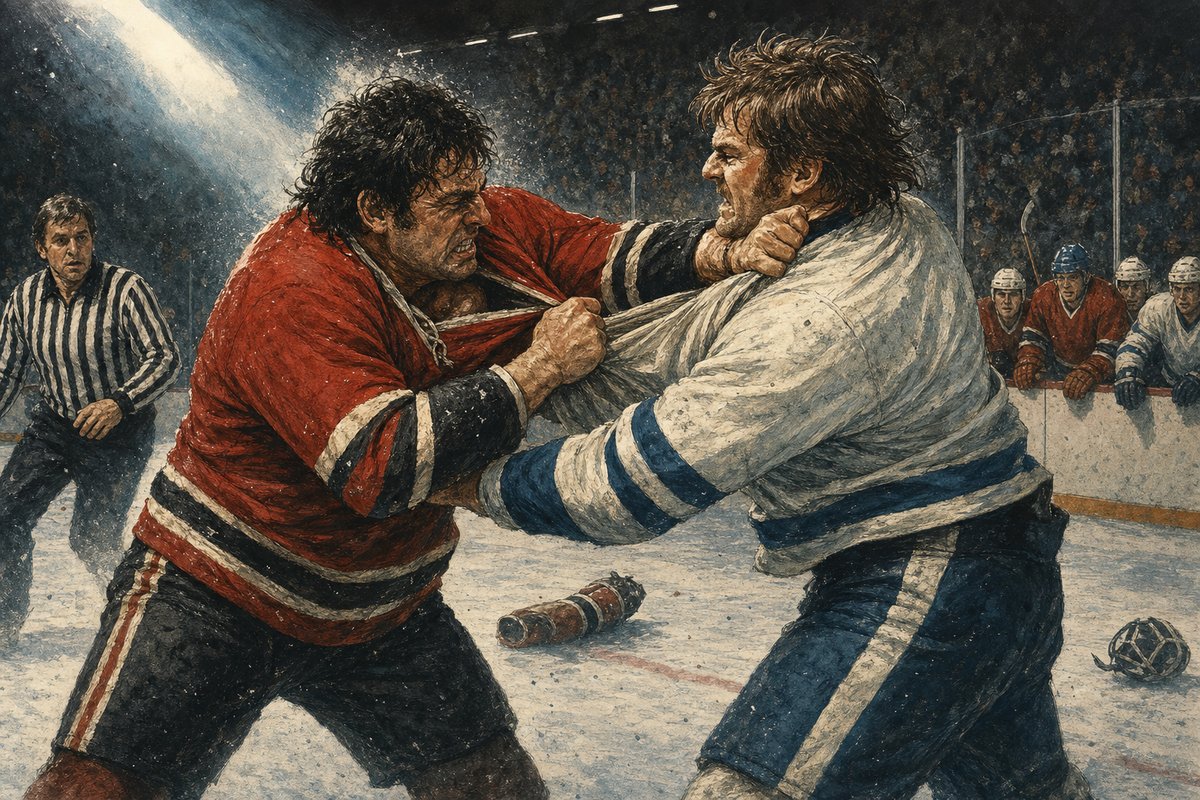
The 30 Most Legendary Brawls in NHL History
Updated June 2026 — Refreshed for the end of the 2025–26 NHL season, with the latest fighting-major trend, links to our full season-by-season decline dashboard, and updated enforcer profiles.
Hockey fights have been part of the game since players first laced up skates. From legendary one-on-one battles between enforcers to massive bench-clearing brawls, fighting has shaped the culture, history, and identity of hockey like no other sport. This is the definitive guide to the greatest hockey fights ever.
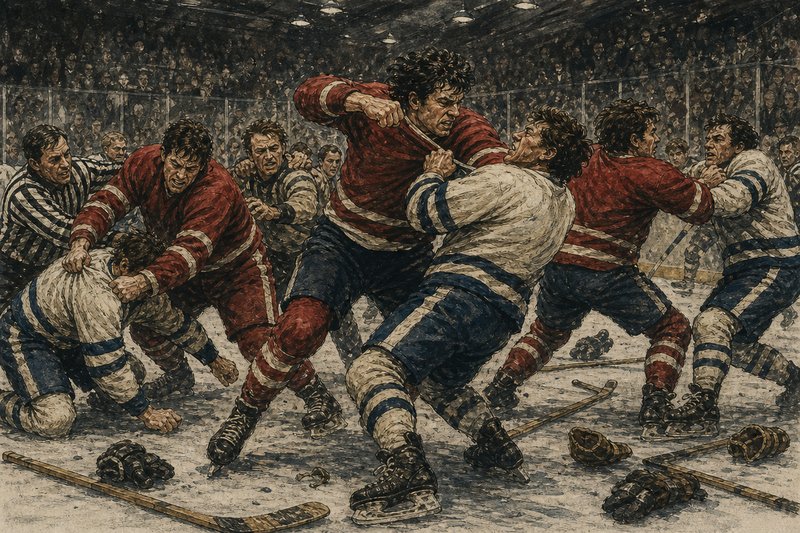
For over a century, fighting has served a unique purpose in hockey. Unlike other sports where fights result in ejections and suspensions, the NHL has traditionally allowed—even encouraged—players to settle disputes with their fists.
"Fighting isn't just violence for violence's sake," explained a veteran enforcer. "It's about accountability. You take a run at our star player? You're going to answer for it. That code keeps the game honest."
The role of the hockey enforcer evolved to protect skilled players, change momentum in games, and enforce the sport's unwritten rules. Players like Bob Probert, Tie Domi, and countless others built careers around their willingness to drop the gloves.
Why it matters: This was the fight that established Tie Domi as a legitimate heavyweight champion-caliber fighter. Bob Probert was the undisputed king of NHL fighters, and no one had truly defeated him. Then Domi landed a series of devastating uppercuts that dropped Probert to the ice.
"That fight changed my career," Domi later said. "Before that, I was just another tough guy. After that, everyone knew I belonged."
Why it matters: A brutal, bloody affair between two of the era's heaviest hitters. Both men landed devastating shots, and neither backed down. The fight showcased Probert at his terrifying best—willing to absorb punishment to deliver his own.
Why it matters: The Montreal Canadiens vs. Quebec Nordiques brawl during the 1984 playoffs remains one of the most violent incidents in NHL history. The chaos resulted in 252 penalty minutes, 10 game misconducts, and fights that spilled into the stands.
Why it matters: Wayne Gretzky's bodyguard vs. the league's most feared fighter. McSorley and Probert fought several memorable battles, each one a clash between two legitimate heavyweights who genuinely wanted to prove themselves.
Why it matters: The culmination of one of hockey's greatest rivalries. Darren McCarty's beatdown of Claude Lemieux—revenge for Lemieux's hit on Kris Draper the previous year—sparked a massive brawl that included goalie Patrick Roy fighting Mike Vernon.
Why it matters: While controversial (Domi was suspended for the sucker punch), this fight illustrated the enforcer's code: dirty players would eventually face consequences. Samuelsson's reputation made him a target for enforcers across the league.
Why it matters: Two of the heaviest punchers of their era throwing haymakers. Brashear was one of the few fighters who could match Probert's power, making their encounters particularly intense.
Why it matters: Though not an NHL fight, this bench-clearing brawl between Canada and the Soviet Union at the World Junior Championship resulted in both teams being disqualified. The lights were turned off in an attempt to stop the fighting. It remains the most infamous hockey brawl ever.
Why it matters: "The Grim Reaper" was 6'6" of intimidation. His fights with Craig Berube, Tony Twist, and other heavyweights were appointment viewing for fans of hockey violence.
Why it matters: After a fan stole a Bruin player's stick, Terry O'Reilly led teammates into the Madison Square Garden stands to confront fans. It remains one of the most shocking incidents in sports history.
For those unfamiliar with why hockey is unique among major sports, here's how fighting works in the NHL:
Beyond the official rules, hockey fighting has always been governed by an unwritten code that players respect:
"The code is what separates hockey fighting from street fighting," explained one veteran. "There are rules. There's honor. Two guys can beat the hell out of each other and shake hands afterward."
In recent years, fighting has declined dramatically in the NHL. The reasons are multiple:
In the 1980s, there were roughly 1.2 fights per game across the NHL. Today, that number has dropped below 0.2. The enforcer, once essential to every roster, has become an endangered species. Through the 2025–26 season the slide has continued, with fighting majors sitting near all-time lows. We track the full season-by-season decline, with the underlying numbers from 1967 to today, in our NHL Fighting Decline Dashboard.
For more on this evolution, read our feature: How Enforcers Have Evolved in Hockey.
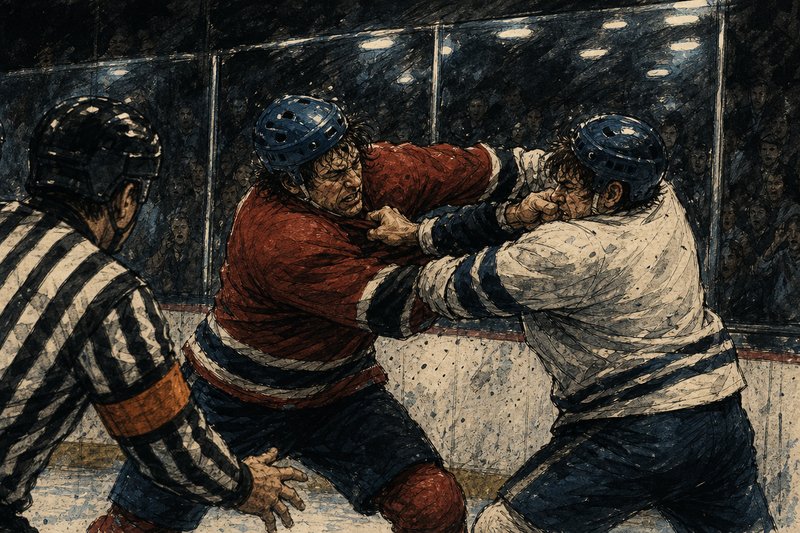
Any list of the greatest hockey fights requires acknowledging the men who made them memorable:
Hockey players fight for several reasons: to protect star teammates from cheap shots, to change momentum in a game, to respond to dirty plays, to energize their team, and historically as part of the enforcer role. Fighting has been part of hockey culture since the sport's earliest days, though it has declined significantly in recent years.
NHL fighting rules require both players to drop their gloves and agree to fight. Players receive a five-minute major penalty for fighting. Instigator penalties can be added. Players must stop when one goes down. Third-man-in rules penalize players who join an ongoing fight. Removing your helmet before a fight results in an additional penalty.
Tie Domi holds the record for most career NHL fights with over 330. Other prolific fighters include Bob Probert (246 fights), Donald Brashear, and Dave Brown. These enforcers accumulated thousands of penalty minutes protecting teammates and enforcing hockey's unwritten code.
The "Punch-up in Piestany" during the 1987 World Junior Championship is considered the biggest hockey brawl ever, resulting in both Canada and the Soviet Union being disqualified from the tournament. In the NHL, the Canadiens-Nordiques brawl on April 20, 1984 (Good Friday Massacre) is among the most infamous.
Yes, fighting is technically legal in the NHL, though it results in penalties. Both fighters receive five-minute major penalties, and additional penalties can be assessed for instigating or continuing to fight after separation. Other leagues, including international hockey, have stricter rules against fighting.
The NHL has traditionally viewed fighting as a form of self-policing that reduces dirty plays and stick work. Many players, coaches, and fans also see fighting as part of hockey's unique culture and entertainment value. However, concerns about player safety and CTE have led to increased penalties for fighting and a dramatic reduction in fights per game.
Most hockey historians and players consider Bob Probert the toughest player ever. His combination of fighting ability (246 career fights, rarely lost), willingness to take on all challengers, and ability to also score (29 goals in 1987-88) made him the complete enforcer. Tie Domi, Dave Schultz, and Tony Twist are also frequently mentioned.
The 2025–26 season has continued the trend of fewer fights in the NHL. Across the first half of the season, fighting majors were down another 11% year-over-year. The NHL has not banned fighting outright, but the combination of player safety protocols, shorter contracts for traditional enforcers, and coaching philosophy shifts has made the game unrecognisable from the Probert era. Yet interest in hockey's fighting history is surging — Google search traffic for "hockey fights" and "NHL enforcers" reached all-time highs in early 2026, suggesting fans remain deeply connected to this part of the game's identity.
Related StoriesThink you know the game better than the oddsmakers? Put your hockey knowledge to work with Canada's best sportsbooks.