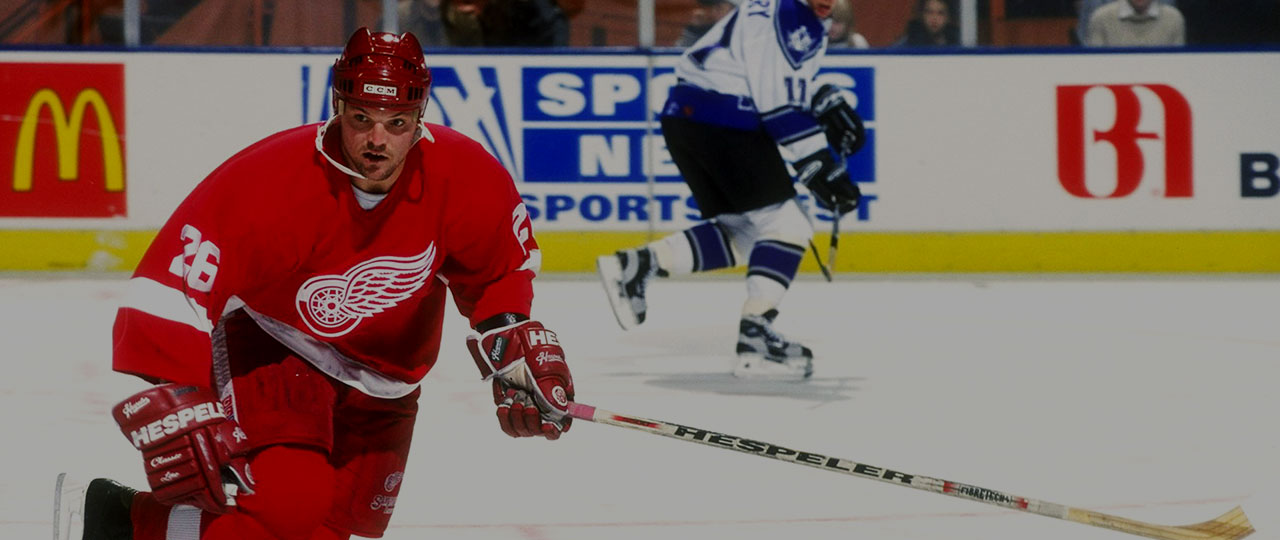

The Dark Side of Hockey Enforcers: CTE, Addiction & Loss
Three Deaths. One Summer. The Price Hockey's Toughest Men Paid.
The summer of 2011 was supposed to be about anticipation. Free agency. Draft picks. The usual off-season chatter that fills the hockey world between June and September. Instead, it became a funeral procession. In the span of 111 days, three NHL enforcers died. Three men who had made their living protecting teammates, who had bled and broken bones for the entertainment of millions, were gone before any of them reached 36 years old.
Their names were Derek Boogaard, Rick Rypien, and Wade Belak. And their deaths forced the hockey world to confront a question it had spent decades avoiding: what is the true cost of being a hockey enforcer?
The Summer of Death: A Timeline
A year before the summer of 2011, there had been a warning. On July 5, 2010, Bob Probert collapsed and died while boating with his family on Lake St. Clair. He was 45 years old. The cause of death was ruled heart failure, but when his family donated his brain to science, researchers at Boston University's CTE Center found something darker: chronic traumatic encephalopathy. The disease had been eating away at Probert's brain for years, likely decades.
Hockey mourned Probert, acknowledged the CTE finding, and then moved on. The game does that. It always has. But in 2011, it became impossible to look away.
Derek Boogaard - May 13, 2011
Derek Boogaard was 6'7" and 265 pounds. He was one of the largest players in NHL history and, by most accounts, one of the most feared fighters to ever lace up skates. He played for the Minnesota Wild and the New York Rangers, and his job description was brutally simple: hurt people before they hurt your teammates.
Off the ice, Boogaard was a gentle, soft-spoken man who organized charity events for children and dreamed of coaching youth hockey after his playing days ended. The contradiction between his public persona and his private self was vast, and it was a gap that grew wider as the years wore on.
Boogaard struggled with addiction to painkillers, a dependency that began, as it did for so many enforcers, with the injuries sustained from fighting. Broken orbital bones. Concussions. A shattered hand. Each injury brought medication. Each medication brought dependence.
On the night of May 13, 2011, Derek Boogaard was found dead in his Minneapolis apartment. He was 28 years old. The medical examiner ruled his death an accidental overdose from a combination of oxycodone and alcohol. When researchers later examined his brain, they found CTE. He was the youngest hockey player ever diagnosed with the disease at that time.
"Derek didn't want to be an enforcer," his brother Aaron later said. "He wanted to play hockey. But he was big, and in hockey, if you're big, they make you fight. That was his ticket to the NHL, and he paid for it with his life."
Rick Rypien - August 15, 2011
Three months after Boogaard's death, the hockey world was hit again. Rick Rypien, a 27-year-old forward who had just signed a contract with the Winnipeg Jets, was found dead at his home in Crowsnest Pass, Alberta. He had taken his own life.
Rypien was small for an enforcer, standing just 5'11" and 190 pounds. But he fought with a desperation and intensity that belied his size. During his time with the Vancouver Canucks, he was a fan favorite, a player who gave everything he had despite being outsized by virtually every opponent he faced.
What the fans didn't see was the depression. Rypien had battled mental health issues for years. He had taken multiple leaves of absence from the Canucks for what the team described at the time as "personal reasons." The NHL's substance abuse and behavioral health program had worked with him, but the help was not enough.
"Rick was one of the best human beings I've ever met," said a former Canucks teammate. "Funny, kind, genuinely good-hearted. But he carried something inside him that none of us could see. Or maybe we saw it and didn't know what to do."
Rypien's death at 27 years old sent shockwaves through a hockey community still reeling from Boogaard. Two enforcers dead in three months. Surely, people said, this was as bad as it could get.
Wade Belak - August 31, 2011
They were wrong. Sixteen days after Rypien's death, Wade Belak was found dead in a Toronto hotel room. He was 35 years old. Like Rypien, Belak had died by suicide.
Belak had retired from the NHL just a year earlier after a 14-season career with the Colorado Avalanche, Calgary Flames, Toronto Maple Leafs, Florida Panthers, and Nashville Predators. He had accumulated 1,263 penalty minutes over 549 games. Unlike many enforcers, Belak had seemed to handle the transition to retirement well. He was working as a television analyst. He had recently signed up for the reality show "Battle of the Blades." He appeared, to those around him, to be thriving.
"Wade was the funniest guy in any room," one former teammate remembered. "He could make anybody laugh. That's the thing about depression, though. The funniest people are sometimes the ones hurting the most."
Three deaths. 111 days. Ages 28, 27, and 35. All enforcers. The hockey world could no longer pretend this was coincidence.
The Science: What CTE Does to the Brain
Chronic Traumatic Encephalopathy is a degenerative brain disease caused by repeated trauma to the head. It cannot be diagnosed in living patients; it can only be confirmed through post-mortem examination of brain tissue. The disease causes the buildup of a protein called tau that slowly destroys brain cells, leading to a cascade of devastating symptoms.
Depression. Memory loss. Confusion. Impulsive behavior. Aggression. Suicidal ideation. Substance abuse. The symptoms of CTE read like a checklist of the problems that plagued hockey enforcers during and after their careers.
The research conducted at Boston University's CTE Center, led by Dr. Ann McKee, has been groundbreaking and damning in equal measure. Studies have found that former hockey enforcers have roughly twice the odds of developing CTE compared to other hockey players. The mechanism is straightforward: enforcers absorb far more blows to the head over their careers than other players, both from fighting and from the physical style of play their role demands.
"Every fight is a potential concussion," explained one researcher. "And these men were having dozens, sometimes hundreds of fights over a career. The cumulative damage is enormous."
The list of former enforcers confirmed to have had CTE continues to grow. Bob Probert. Derek Boogaard. Steve Montador, who died in 2015 at age 35 and was found to have CTE. Todd Ewen, who died by suicide in 2015 at age 49, though initial reports of CTE were later disputed. The pattern is unmistakable.
The Families Who Fought Back
Behind every fallen enforcer is a family that has had to pick up the pieces. Many of those families have become advocates, turning their grief into a force for change.
Joanne Probert, Bob's widow, was instrumental in the decision to donate her husband's brain to CTE research. That decision helped establish hockey as a sport with a significant CTE problem, not just football. She has spoken publicly about the changes she observed in her husband during his final years: the mood swings, the forgetfulness, the personality shifts that are now recognized as hallmarks of the disease.
The Boogaard family filed a wrongful death lawsuit against the NHL in 2013, alleging that the league failed to warn Derek about the dangers of fighting and improperly managed his addiction to painkillers. The case was eventually settled as part of a broader class-action concussion lawsuit, but the family's willingness to fight brought national attention to the issue.
"They knew what fighting did to these men," Len Boogaard, Derek's father, said. "The NHL knew. The teams knew. The trainers knew. And they kept sending them out there because it sold tickets."
Daniel Carcillo: The Enforcer Who Lived to Tell
Not every enforcer's story ends in death. Some survive and become voices for the fallen. Daniel Carcillo is perhaps the most prominent example.
Carcillo played 429 NHL games over nine seasons, accumulating 1,233 penalty minutes. He won two Stanley Cups with the Chicago Blackhawks. By any measure, he had a successful career. But the cost was staggering.
After retiring, Carcillo went public with his battle against depression, anxiety, and suicidal thoughts. He described the toll that years of fighting and head trauma had taken on his brain, and he became a vocal critic of the NHL's approach to player safety.
"I wanted to kill myself," Carcillo said in interviews. "That's not a metaphor. I had a plan. I was going to do it. The only reason I'm still here is because I got help in time."
Carcillo co-founded the Chapter 5 Foundation, which provides support for former athletes dealing with brain injuries, addiction, and mental health issues. He has also been involved in lawsuits against the NHL and has testified before Congress about the need for greater protections for professional athletes.
His advocacy, born from his own suffering, has helped destigmatize mental health issues among professional hockey players. Former enforcers who once would have suffered in silence now have a path to seek help, in no small part because of Carcillo's willingness to be vulnerable in public.
Chris Simon: Stage 3 CTE While Still Living
In 2025, former NHL enforcer Chris Simon made headlines when he revealed that doctors believed he was suffering from Stage 3 CTE. Unlike most CTE cases, which are diagnosed only after death, Simon's diagnosis was based on clinical observation and advanced imaging techniques that have been developed in recent years.
Simon played 782 NHL games and accumulated 1,824 penalty minutes during a career that included stints with the Quebec Nordiques, Colorado Avalanche, Washington Capitals, Chicago Blackhawks, New York Rangers, Calgary Flames, Minnesota Wild, and New York Islanders. He was also known for some of the most violent acts in modern NHL history, including a 25-game suspension for stomping on the leg of Pittsburgh's Jarkko Ruutu in 2007.
Simon, who is of Ojibwe descent, has spoken about how his struggles mirror those of many Indigenous communities dealing with trauma, and he has become an advocate for brain injury awareness among First Nations people.
His case is significant because it represents a shift in CTE research. If the disease can be identified in living patients, it can potentially be treated, or at least managed, before it leads to the catastrophic outcomes that have claimed so many enforcers' lives.
The NHL's Response: Too Little, Too Late?
The NHL's handling of the enforcer CTE crisis has been, by most accounts, inadequate. While the league has implemented some changes, including concussion protocols, the Department of Player Safety, and increased penalties for head shots, critics argue these measures do not address the fundamental problem: fighting is still part of the game.
In 2018, the NHL settled a class-action concussion lawsuit brought by more than 300 former players. The terms of the settlement were confidential, but crucially, the NHL did not admit any liability or wrongdoing. The league has consistently maintained that it did not know, and could not have known, the long-term risks of repeated head trauma.
This position strains credibility. As early as the 1970s, medical professionals were raising concerns about the cumulative effects of concussions in contact sports. By the 2000s, the evidence was overwhelming. Yet the NHL continued to market fighting as a core part of the hockey experience.
"The league profited from these men's destruction," one former player agent said bluntly. "They sold jerseys with their names on the back. They marketed their fights. They knew what was happening, and they chose revenue over responsibility."
The counterargument, offered by the league and its defenders, is that fighting has always been a consensual act between two willing participants. Players know the risks. They choose to fight. This argument ignores the reality that many enforcers felt they had no choice: fight or lose your job, your livelihood, your identity.
What Happened to NHL Enforcers: The Moral Reckoning
The enforcer role has diminished significantly in the modern NHL. Fighting is down more than 70% from its peak in the 1980s and 1990s. Teams no longer roster designated fighters. Speed, skill, and puck possession have replaced intimidation as the dominant strategies.
But this evolution has come too late for a generation of men who were used up and discarded by the game they loved. The question that haunts the hockey world is a simple one: were enforcers sacrificed for entertainment?
The answer, uncomfortable as it may be, appears to be yes.
These were men who were told from a young age that their value lay in their fists. Many of them had genuine hockey talent, but the system channeled them toward a role that would ultimately destroy them. They were celebrated when they fought and forgotten when they fell.
Stu Grimson, the former enforcer known as "The Grim Reaper," has been outspoken about this dynamic. Now a practicing attorney, Grimson has spoken about the pressure enforcers faced to fight even when injured, concussed, or mentally unwell. The code of fighting that governed hockey for decades, while it had its own honor system, ultimately served the interests of the league and the fans more than it served the men who lived by it.
"We were gladiators," Grimson said. "And like gladiators, we were disposable."
Looking Forward: Prevention and Hope
The legacy of Boogaard, Rypien, Belak, Probert, and the others who have been lost is not only one of tragedy. It is also one of change. Their deaths forced conversations that had been long overdue. Mental health resources in the NHL are vastly improved from what they were in 2011. Concussion protocols, while imperfect, are far more robust. The stigma around seeking help has diminished, though it has not disappeared.
Organizations like Carcillo's Chapter 5 Foundation, the Professional Hockey Players' Association (PHPA), and various CTE research centers continue to push for better understanding and treatment of brain injuries.
Advances in neuroimaging may someday allow CTE to be diagnosed in living patients routinely, enabling treatment before the disease progresses to its most devastating stages. Experimental therapies targeting tau protein buildup are in clinical trials. There is, for the first time, genuine scientific hope.
But hope does not bring back the dead. It does not erase the suffering of the families left behind. And it does not absolve an industry that profited from the destruction of the men it claimed to honor.
The dark side of the hockey enforcer is not a story with a happy ending. It is a story that is still being written, in research labs and courtrooms and therapy sessions and graveyards. And the hockey world owes it to the men who paid the ultimate price to make sure it is a story that is never forgotten.
Frequently Asked Questions
How many NHL enforcers have died from CTE-related causes?
Multiple NHL enforcers have died from causes linked to CTE and its effects. Notable cases include Derek Boogaard (accidental overdose, 2011, age 28), Rick Rypien (suicide, 2011, age 27), Wade Belak (suicide, 2011, age 35), Bob Probert (heart failure, 2010, age 45, CTE confirmed), and Steve Montador (2015, age 35, CTE confirmed). The actual number of affected players is believed to be significantly higher than confirmed diagnoses suggest.
What happened in the summer of 2011 with NHL enforcers?
In 2011, three NHL enforcers died within 111 days. Derek Boogaard died of an accidental drug and alcohol overdose on May 13 at age 28. Rick Rypien died by suicide on August 15 at age 27. Wade Belak died by suicide on August 31 at age 35. These three deaths, coming just a year after Bob Probert's death, forced the hockey world to confront the devastating toll that fighting takes on enforcers' bodies and minds.
What is CTE and why are hockey enforcers at higher risk?
Chronic Traumatic Encephalopathy (CTE) is a degenerative brain disease caused by repeated head trauma. Hockey enforcers are at higher risk because their role involves regular bare-knuckle fighting, often absorbing hundreds of blows to the head over a career. Research from Boston University found that former hockey enforcers have roughly twice the odds of developing CTE compared to other players. Symptoms include depression, memory loss, impulsive behavior, and suicidal ideation.
Did Bob Probert have CTE?
Yes. After Bob Probert's death on July 5, 2010, at age 45 from heart failure, his family donated his brain to Boston University's CTE Center. Researchers confirmed the presence of chronic traumatic encephalopathy. Probert was one of the first NHL players to be posthumously diagnosed with CTE, and his case helped establish hockey as a sport with a significant brain injury problem.
What has the NHL done about CTE and enforcer safety?
The NHL has taken incremental steps including implementing concussion protocols, adding the Department of Player Safety, and increasing penalties for head shots. The league settled a class-action concussion lawsuit with former players in 2018 but did not admit liability. Critics argue the response has been insufficient, as fighting remains legal and the league has been slow to acknowledge the direct connection between fighting and CTE.
Related Stories
- Bob Probert: Hockey's Toughest Man
- Derek Boogaard: The Boogeyman's Tragic Story
- How Enforcers Have Evolved in Hockey
- What Happened to NHL Enforcers?
- Stu Grimson: The Grim Reaper's Journey From Ice to Faith
- The Unwritten Code: Hockey's Rules of Fighting
Love Hockey? Try Hockey Betting
Think you know the game better than the oddsmakers? Put your hockey knowledge to work with Canada's best sportsbooks.