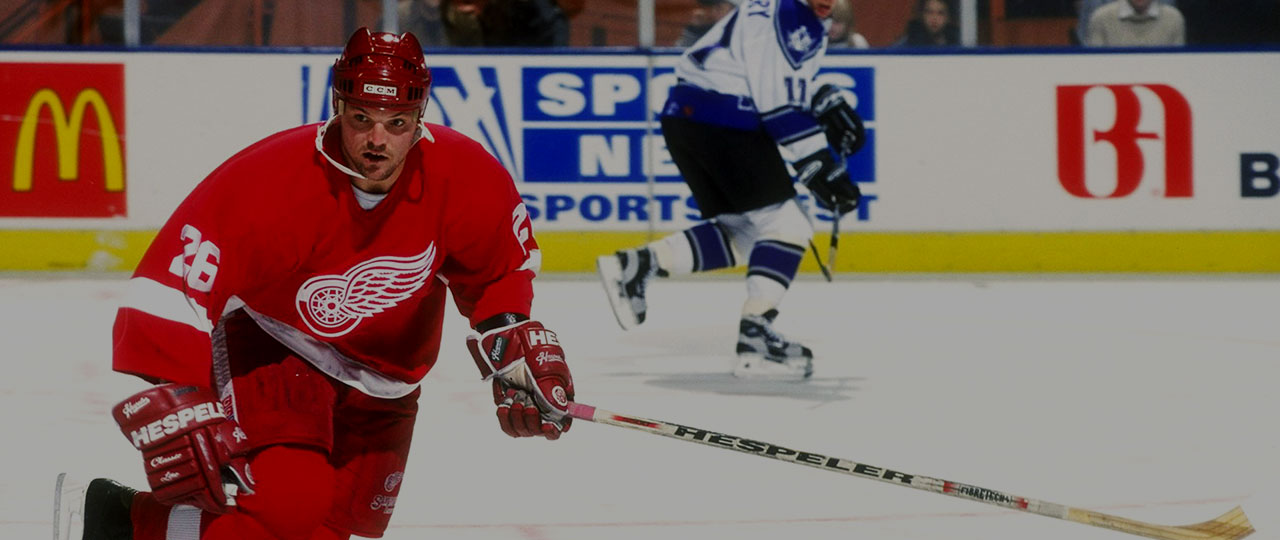

Wayne Gretzky's Unbreakable Records (And the One Ovechkin Finally Broke)
The Numbers That Define the Greatest Player Who Ever Lived
Wayne Gretzky at a Glance
- Born: January 26, 1961 (Brantford, Ontario)
- NHL Career: 1979–1999 (Edmonton Oilers, LA Kings, St. Louis Blues, NY Rangers)
- Games Played: 1,487
- Goals: 894
- Assists: 1,963
- Points: 2,857
- Stanley Cups: 4 (1984, 1985, 1987, 1988)
- Hart Trophies (MVP): 9
- Art Ross Trophies (Scoring): 10
- Records Held: 61 NHL records
On the evening of April 17, 2025, inside a sold-out arena that had been buzzing with anticipation for weeks, Alex Ovechkin received a pass, wound up in his familiar shooting position on the left faceoff circle, and launched a slap shot past a helpless goaltender. Goal number 895. The building erupted. The scoreboard flashed a number that had been considered untouchable for over three decades. And Wayne Gretzky's all-time NHL goals record — 894 goals, a mark Gretzky had set in 1994 — was finally, officially, history.
It was the biggest hockey story of the decade. Possibly the biggest hockey story since The Trade. Sports networks devoted hours of coverage to it. Former players wept on camera. Canadian newspapers ran full-front-page photos. Ovechkin, at 39 years old after 20 NHL seasons, had done what an entire generation of hockey players had tried and failed to do: he had reached the one number in professional hockey that seemed to belong permanently to one man.
But here's the thing about Wayne Gretzky and records. He doesn't just hold one. He holds 61. And the goals record — as significant as it was, as hard as Ovechkin worked to break it — was arguably not even Gretzky's most impressive mark. Not close.
After April 17, 2025, Wayne Gretzky still holds 60 NHL records. Several of them are so far beyond any realistic challenge that they exist in a category of athletic achievement that can only be described as permanent. Understanding why requires sitting with some numbers that, even now, don't feel entirely real.
The Record That Fell — Gretzky's 894 Goals
Let's start with the record that fell, because it deserves its proper context. Wayne Gretzky scored 894 regular-season goals in 1,487 NHL games. That's an average of roughly 0.60 goals per game across his entire career — but that average disguises the fact that in his early seasons, Gretzky was scoring at a pace that simply doesn't exist in the modern game.
In the 1981–82 season, Gretzky scored 50 goals in 39 games. He finished that season with 92 goals. He scored 87 the following year, 73 the year after that. During his first nine NHL seasons, he scored fewer than 52 goals only once — the year he scored "just" 40 in a shortened season. He hit the 50-goal mark in 50 games or fewer on five separate occasions.
What made Gretzky's goal totals even more stunning was the context: he was primarily a playmaker, not a shooter. He scored 894 goals, yes. But he also accumulated 1,963 assists — a number that is, by itself, the second-highest points total in NHL history. Think about that for a moment. His assists alone would make him the second-greatest scorer in the history of the game, behind only himself.
Ovechkin's chase of 894 spanned more than a decade of sustained elite performance. After scoring his 700th goal in 2018 and his 800th in 2022, Ovechkin was in a race against age, injury, and the brutal mathematics of chasing a number that kept moving just out of reach. He surpassed Gordie Howe's old second-place mark of 801 in 2022. From there to 894 took three more seasons of play that would have been remarkable for a player half his age.
Gretzky needed 15 NHL seasons to set his record. Ovechkin needed 20 seasons to break it. That gap is instructive. It tells you exactly how far above the competition Gretzky was operating, even when the player chasing him was one of the greatest goal scorers in hockey history.
The Records That Will Never Fall
Now we get to the records that no amount of talent, longevity, or dedication will ever threaten. These aren't records that might last another generation. These are records that are structurally impossible to break given how the modern game is played — and in some cases, how any version of hockey could ever be played.
2,857 Career Points
This is the one. The number that makes every other achievement in professional team sports look modest by comparison. 2,857 career points. Gretzky reached this total not through one extraordinary season but through relentless, decade-long dominance at a level the game had never seen before and has not seen since.
The second-most points in NHL history belongs to Jaromir Jagr: 1,921 points. That gap — 936 points — is itself larger than the career totals of hundreds of excellent NHL players. Marcel Dionne, one of the greatest scorers of his generation, finished with 1,771 points. The gap between Gretzky and Dionne is more than 1,000 points. Mario Lemieux, considered by many to be the second-greatest player ever, retired with 1,723 points. The gap between Gretzky and Lemieux is 1,134 points.
Here is the mathematical reality: if a player entered the NHL today and scored 150 points per season — a total nobody has reached since Gretzky himself in the 1989–90 season — it would take them more than six full seasons just to accumulate enough points to close the gap between Jagr and Gretzky. They would still need to then surpass Gretzky's total, which would require roughly seven seasons of 150-point hockey. Nobody scores 150 points in the modern NHL. The current single-season record in the post-lockout era is 153 points (Connor McDavid, 2021–22). That was an all-time performance. Gretzky scored 200+ points four times.
163 Assists in One Season (1985–86)
Wayne Gretzky once recorded 163 assists in a single NHL season. One hundred and sixty-three. In 80 games. That is not a typo, and it requires a specific kind of emphasis: 163 assists alone are more points than any player has ever scored in a season since Gretzky's own dominance ended.
The highest single-season points total in the post-Gretzky era is 199 — Mario Lemieux in 1988–89. Lemieux scored 85 goals and 114 assists that year. Gretzky's single-season assist record exceeds Lemieux's entire points haul from one of the greatest individual seasons in hockey history. Let that land.
In the modern NHL, a player who records 80 assists in a season is considered to have had a historic year. McDavid's record-setting 2021–22 season included 123 assists. Remarkable. Still 40 short of Gretzky's best.
92 Goals in One Season (1981–82)
Gretzky scored 92 goals in 80 games during the 1981–82 season. The next-highest single-season total in NHL history is 76, scored by Brett Hull in 1990–91. The highest single-season goal total since Hull's 76 is 65 — by Ovechkin himself, in 2007–08. The gap between Gretzky's record and the modern game's best season is 27 goals. In hockey, 27 goals is a solid full season for a contributing forward.
Lemieux scored 85 goals in 1988–89, the second-highest total in NHL history. He described Gretzky's 92-goal season as something that existed in a completely different dimension from anything he or any other player had experienced.
215 Points in One Season (1985–86)
During the same season he recorded 163 assists, Gretzky also scored 52 goals, giving him 215 points in a single season. Two hundred and fifteen. He scored 200 or more points in four different seasons. His lowest-scoring full NHL season — a year he was dealing with injuries and an aging roster around him — still produced 62 points, a total that would lead most NHL teams in scoring in any given year.
The 215-point season is so removed from anything that exists in modern hockey that it has ceased to function as a benchmark. Players today aim for 100 points as a marker of greatness. Gretzky scored 215 in a single season. Twice, he scored 200 or more. Four times, he finished with 190 or more.
50 Goals in 39 Games
On December 30, 1981, Wayne Gretzky scored his 50th goal of the season in the Oilers' 39th game. The previous fastest 50-goal pace had been set by Maurice Richard and Mike Bossy, both of whom scored 50 goals in exactly 50 games. Gretzky reached 50 in 39. He went on to score 92 that season. The fastest 50-goal pace since belongs to Brett Hull in 1990–91: 50 goals in 49 games — ten games slower than Gretzky at his peak.
The Gretzky Numbers Nobody Talks About
Beyond the headline records are a set of statistical footnotes that, in any other context, would be the defining achievement of an entire career. Gretzky won the Art Ross Trophy (given to the NHL's leading scorer) ten consecutive times, from 1981 to 1987 and then again from 1990 to 1994. He scored 100 or more points in 15 of his 20 NHL seasons. In seasons where he failed to reach 100 points, he was typically dealing with a serious injury or playing significantly fewer than 80 games.
He won the Hart Trophy as NHL MVP nine times. The next-most Hart Trophies in history belong to Gordie Howe, whose records Gretzky was chasing for much of his early career, and Bobby Clarke: six each. Gretzky won nine. He won four Stanley Cups with the Edmonton Oilers dynasty, surrounded by Dave Semenko, his most feared protector, and a roster that was assembled specifically to maximize what he could do with a puck.
Perhaps the most mind-bending single statistic in all of professional sports: Wayne Gretzky's career assists total (1,963) is higher than the career points total of every other player in NHL history. If you erased every goal Gretzky ever scored — all 894 of them — he would still be the all-time points leader by more than 40 points over Jagr's 1,921.
The Ovechkin Chase — How Long Did It Actually Take?
Alexander Ovechkin was selected first overall by the Washington Capitals in the 2004 NHL Entry Draft. He played his first NHL game in October 2005. He scored his first NHL goal in his very first game, a spectacular effort that gave immediate notice of what was to come. He went on to win the Calder Trophy as Rookie of the Year, the first of what would become a staggering collection of individual hardware.
Ovechkin knew from relatively early in his career that the goals record was theoretically reachable. He had the hardest shot in the game, a positioning instinct on the power play that bordered on supernatural, and the physical durability to play 70-plus games in virtually every season of his career. He won eight Rocket Richard Trophies as the NHL's leading goal scorer. He became, in the process, the clearest argument for a player who might actually do what so many others had failed to do.
It still took him 20 seasons. Gretzky set the record in 15. When the moment arrived on April 17, 2025, Ovechkin was 39 years old. Gretzky had set the record at 33. The gap between them in career length required to reach the same number tells the story more clearly than any narrative could.
Gretzky was gracious. He said publicly that he had been rooting for Ovechkin for years and that Alexander deserved the title of the greatest goal scorer who ever lived. There was something fitting about it — the two greatest goal scorers in NHL history, separated by generations, connected by the same number that had defined the sport's statistical ceiling for three decades. Gretzky attended events surrounding the record chase. He was warm in his public comments. He had always said the record was meant to be broken.
What he did not say — what didn't need to be said — was that the other 60 records were going nowhere.
The Gretzky Effect on Hockey
Beyond the statistics, Wayne Gretzky transformed professional hockey in ways that the sport is still living with. His trade from the Edmonton Oilers to the Los Angeles Kings on August 9, 1988 — "The Trade," as it is still referred to in Canada, as if no other trade in sports history requires context — was the single most significant transaction in the history of the sport. Edmonton fans were devastated in a way that has no real parallel in North American sports. The Province of Alberta considered it a national tragedy.
In Los Angeles, Gretzky's arrival triggered a hockey boom in the American Sun Belt. The Kings began selling out the Forum. Stars and celebrities attended games. The NHL expanded to Anaheim, San Jose, Florida, Tampa Bay, and Phoenix over the following decade — every one of those expansions directly traceable to the cultural footprint Gretzky created in California. He essentially built the modern NHL's geographic footprint by himself, with Marty McSorley, who protected him in Los Angeles, playing a role that echoed what Semenko had provided in Edmonton.
There is also what became known as "The Gretzky Rule" — the decision to eliminate the line that connected the goal crease to the boards along the sides of the ice. Gretzky had famously operated from the space behind the opposing net — what became known as "Gretzky's Office" — and the line was eventually removed to allow players freer movement in that zone. The game's rules were literally altered because of how one player used the ice.
His brief coaching career and his time as an ownership figure proved that Gretzky the executive was not Gretzky the player. That's forgivable. There are no comparable benchmarks. When you have spent 20 years being the most gifted practitioner of something anyone has ever seen, the transition to teaching it reveals a different challenge entirely. What he understood intuitively, he found difficult to articulate. It is the curse of genius.
Will Any of These Records Ever Fall?
The honest answer is almost certainly no — not because today's players lack the talent, but because the structural conditions that made Gretzky's records possible no longer exist and cannot be re-created.
The NHL of the 1980s was a higher-scoring league operating in an era before the defensive systems and neutral-zone traps that began to dominate in the late 1990s. Goaltending equipment was smaller. Defensive positioning was less sophisticated. The game was faster in terms of offensive tempo, and it was also, frankly, more violent in ways that cleared space for skilled players. An era when fighting was central to the game also meant that enforcers created physical and psychological room for stars to operate that simply doesn't exist today.
Modern hockey is an exceptional sport. Players today are bigger, faster, and more technically sophisticated than at any point in the game's history. McDavid is the most athletically gifted player the league has ever produced. But he plays in a league where 130-point seasons are historic achievements, where defensive systems suppress scoring throughout the game, and where the salary cap limits dynasties from stockpiling the kind of talent the Oilers assembled in the 1980s.
Gretzky's point totals are not records in the conventional sense — they are not marks that will eventually fall to the right combination of talent and longevity. They are artifacts of a specific moment in hockey history, achieved by a player who was so far beyond the competition that even the competition's all-time bests couldn't approach him. The goals record fell after 31 years, to one of the greatest players of the modern era, after 20 seasons of sustained elite scoring. Everything else is staying exactly where it is.
Frequently Asked Questions
How many NHL records does Wayne Gretzky hold?
Wayne Gretzky holds 61 official NHL records as of 2026. He broke his own records multiple times across different seasons, meaning many of the records on that list are ones he set and then surpassed himself. Even after Ovechkin broke his all-time goals record in April 2025, Gretzky retains 60 others — including career points, single-season points, single-season assists, and dozens of other marks across different statistical categories.
What record did Ovechkin break in 2025?
Alex Ovechkin broke the all-time NHL goals record on April 17, 2025, scoring his 895th career goal to surpass Gretzky's mark of 894. Gretzky had set that record during the 1993–94 season, his final year with the Los Angeles Kings, and it had stood for 31 years. Ovechkin required 20 NHL seasons to reach the milestone that Gretzky had set in 15.
Could anyone ever break Gretzky's points record?
Extremely unlikely. His 2,857 career points are 936 more than second all-time (Jagr, 1,921). Even scoring 150 points per season — something nobody has done since Gretzky himself in 1990 — would require more than six full seasons just to close the gap between Jagr and Gretzky, starting from Jagr's total. Nobody has scored 150 points in a season in over three decades. The current post-lockout era record is 153 (McDavid, 2021–22), and even that would require sustained excellence across a decade to approach Gretzky's career total.
Did Gretzky ever comment on Ovechkin breaking his record?
Yes. Gretzky was generous and gracious throughout the record chase and at the milestone itself. He said publicly that he had been rooting for Ovechkin for years and that Alexander deserved to be called the greatest goal scorer who ever lived. Gretzky had long maintained that records were meant to be broken and that Ovechkin's chase was good for hockey. His response stood in contrast to some of the more complicated public sentiment in Canada, where the breaking of a record held by a national icon carried its own emotional weight.
Related Stories
More from Slapshot Diaries
Beyond the stories — explore our guides to online entertainment in Canada.