
Stanley Cup Traditions & Superstitions: The Unwritten Rules of Hockey's Holy Grail
The Rituals, Superstitions, and Sacred Laws That Govern Hockey's Greatest Prize
The Stanley Cup at a Glance
- Original Cup Donated: 1892 by Governor General Lord Stanley of Preston
- Cost of Original: £10 (approximately $50 at the time)
- Weight: 34.5 lbs / 15.7 kg
- Height: 35.25 inches / 89.5 cm
- Inscribed Bands: 13 (with retired bands in the Hockey Hall of Fame)
- Number of Names: Over 2,500 players, coaches, and officials
- Travel Tradition: Each player gets 1 day with the Cup (since 1995)
- Capacity: Can hold approximately 14 beers when used as a drinking vessel
There are trophies in professional sports, and then there is the Stanley Cup. No other championship prize in North American athletics carries the same weight of history, superstition, and ceremony. The Vince Lombardi Trophy gets handed to an owner on a podium. The Commissioner's Trophy sits behind a podium while cameras flash. The Larry O'Brien Trophy is lifted once and returned to a display case.
The Stanley Cup travels the world. It has been baptized in, drunk from, dropped, left on the side of a road, and submerged in a canal. It has visited hospital wards, remote Canadian communities, and celebrity rooftop pools in Los Angeles. Every player who wins it gets a single day alone with it — a tradition that has produced some of the most genuinely human stories in professional sports.
And hovering over all of it is a set of unwritten rules so universally understood and so zealously observed that they constitute their own kind of religion. The playoff beard. The conference trophy you must never touch. The handshake line that transforms enemies into temporary brothers. These traditions were not invented by committees or mandated by the NHL's front office. They emerged organically from the culture of a sport that has always governed itself through unspoken codes — the unwritten code that governs hockey applies to trophies as much as it does to anything that happens between the boards.
Here is the complete guide to the traditions, superstitions, and sacred laws that surround hockey's most famous object.
The Playoff Beard — Hockey's Most Famous Superstition
Every spring, as the NHL regular season winds down and the playoff bracket comes into focus, something begins happening on the faces of hockey players across the league. Razors get put away. Stubble becomes scruff becomes full beard. By the second round, veteran players are sporting growths that would be remarkable in any other context. By the conference finals, you're looking at men who appear to have just returned from six weeks in the wilderness.
This is the playoff beard, and its origins are both simple and unexpectedly organic. The tradition is most commonly attributed to the New York Islanders dynasty of the early 1980s. As the Islanders began their run to four consecutive Stanley Cup championships starting in 1980, players collectively stopped shaving when the playoffs began. There was no announcement, no team policy, no veteran telling rookies what to do. It simply happened — and then they won. Players kept doing it the following year, and the year after that. They kept winning. The superstition took hold.
By the mid-1980s, the tradition had spread beyond the Islanders. By the end of the decade, it was league-wide. Today it is arguably the most recognized superstition in all of professional team sports, understood by fans who have never watched a hockey game in their lives. Celebrity culture has adopted it. Athletes in other sports have borrowed it for their own playoff runs. The NHL playoffs are, in no small part, defined visually by the increasingly elaborate facial hair that appears on players as the rounds progress.
The beard is not a fashion choice. It is a commitment device — a physical marker that signals the playoffs have started and that nothing normal applies until the Cup is decided. Players shave immediately after being eliminated. A team that is still playing in late June is a team full of men who haven't touched a razor since mid-April. The connection between the beard and the outcome is, of course, irrational. Players know this. They do it anyway.
The culture around the beard is itself rich with nuance. Rookies are expected to participate even if they produce something that could generously be called patchy. Veterans with exceptional beard genetics are quietly celebrated. There have been players who grew beards of such impressive dimensions that they became storylines in their own right. And there have been players — almost always enforcers, almost always wearing the expression of men who had made a principled decision — who refused on stylistic grounds and found themselves exempt by team consensus, which is its own kind of code.
Never Touch the Conference Trophy
Of all the superstitions in professional hockey, this one is the most absolute. Players will not touch the conference championship trophies. They will go to considerable lengths to avoid even appearing near them. In the moments after winning the Eastern or Western Conference Finals, when the Clarence S. Campbell Bowl or the Prince of Wales Trophy is brought onto the ice for the presentation ceremony, players from the winning team stand in a loose semicircle and watch it happen without approaching. Team captains, who are handed the trophy by league officials, sometimes hold it briefly before passing it along — but even this brief contact is performed with the energy of someone handling something that might bite.
The superstition is this: if you celebrate winning the conference title too enthusiastically, you will lose the Stanley Cup Final. Touching the trophy is the specific act of celebration that invites disaster. Nobody knows exactly when this became universal. Like the playoff beard, it appears to have grown gradually through the 1990s and into the 2000s until it was simply assumed knowledge — every player in every dressing room understood the rule without being told.
What gives this particular superstition its special power is the number of supposed confirmation events. Teams that touched the conference trophy and then lost the Cup Final became cautionary tales. Teams that carefully avoided it and won became testimonials. The human brain is exceptionally good at remembering the cases that confirm a belief and forgetting the cases that contradict it, and in this regard, hockey players are no different from anyone else.
The occasional rookie who doesn't yet know the rule — or who knows it and, in a moment of unguarded euphoria, picks up the trophy — is typically met with the kind of horror from teammates that suggests they have accidentally opened a cursed artifact. The correction comes quickly and quietly, the way corrections of important mistakes always do in locker rooms.
The tradition has its defenders and its skeptics among former players. The defenders will cite specific cases where the trophy was touched and disaster followed. The skeptics will point out that the sample size is too small and the selection effects too strong to draw conclusions. Both groups will tell you that they personally never touched it and never would, regardless of their theoretical views on hockey superstition.
The Handshake Line — Sportsmanship at Its Finest
When the final whistle blows on the Stanley Cup Final series, something happens that has no real equivalent in any other major professional sport. Both teams line up at center ice — the winners still in various states of celebration, the losers absorbing the full weight of what just happened — and proceed to skate past each other, shaking the hand of every single player on the other team. Every player. Including the ones who hit you from behind in Game 3. Including the one who gave you a two-handed slash in overtime of Game 6. Including the goaltender who stood on his head and stole two games the series before.
The handshake line is widely considered the most dignified tradition in professional team sports. It has no formal rule behind it — the NHL does not mandate it. It exists because it has always existed, because it emerged from the amateur game where sportsmanship was built into the fabric of competition, and because the alternative — simply leaving the ice in opposite directions — would be regarded by players and fans alike as a kind of moral failure.
What makes the handshake line genuinely moving, and not merely ceremonial, is the context in which it occurs. These are two teams that have spent two weeks, sometimes three, trying to physically and psychologically destroy each other. The battles in the 2002 Stanley Cup Final between the Detroit Red Wings and the Carolina Hurricanes produced a handshake line of particular emotional weight — both teams had genuine respect for each other, and it showed in the length of the conversations that stopped the line. In the context of the most violent rivalry in hockey history, the Red Wings–Avalanche handshakes over the years carried additional gravity precisely because of how much genuine dislike existed between those teams.
Players describe the handshake line differently depending on whether they are leaving as winners or losers. Winners remember it as a blur of emotion — they are already thinking about what comes next, about hoisting the Cup, about the families in the stands. Losers describe it as the hardest two minutes of their professional lives. You have just lost the most important series of your career, possibly the last real chance you'll ever have at a championship, and you are required to look the people who beat you in the eye and acknowledge them. Former players who have been on the losing side almost universally describe it as one of the most formative experiences of their careers.
A Day With the Cup — Every Winner's Summer Story
Since 1995, the Stanley Cup has embarked on what might be the most unusual tour in the history of sports trophies. After the championship is decided, the Cup travels with every member of the winning team — players, coaches, training staff, front office personnel — for a single personal day. One day per person. A Hockey Hall of Fame curator accompanies the Cup everywhere it goes. The keeper's job is to ensure the Cup survives its day with whoever has it — a task that has required more vigilance than you might expect.
The stories that have emerged from this tradition are, collectively, a kind of unintentional ethnography of professional hockey. The Cup has visited small Ontario towns where former fourth-liners brought it back to the rink they grew up skating on at 5 a.m. It has appeared at backyards in Michigan, at the beaches of Quebec, at restaurants in Stockholm and Helsinki and Moscow. European players have taken it home to countries where hockey is a minor sport, and where its arrival caused genuine civic celebrations.
In one of the most repeated Cup stories, a player had a flat tire while transporting the trophy and left it briefly on the side of the road in Quebec City while dealing with the car — the Cup sitting in its traveling case on a gravel shoulder while traffic passed. The keeper presumably remained nearby. In another story, a player used the bowl of the Cup — which is substantial, the top section being a large inverted dome of silver — to feed his dog. The keeper reportedly photographed this event with the professional detachment of someone who had seen far stranger things.
Babies have been baptized in it. Multiple players have eaten cereal from it. Multiple players have slept with it in their beds. It has been taken swimming, brought to community hockey rinks, displayed in hospital rooms for sick children, and paraded through cities that hadn't seen it in decades. One player took it to his childhood home and let his entire neighborhood take turns holding it. Another brought it to his hometown in rural Russia and was met by a crowd that had never seen an NHL game but understood what they were looking at.
The Cup day tradition is the clearest expression of what distinguishes the Stanley Cup from every other championship trophy in professional sports: it belongs to the players who won it, not to the organization, and for one day every summer, it becomes genuinely theirs.
The Drinking Tradition — What's Been Drunk From the Cup
The Stanley Cup is not designed as a drinking vessel. It was not made with this purpose in mind. The original trophy donated by Lord Stanley of Preston in 1892 was a simple bowl mounted on a base, and its dimensions were not chosen with champagne consumption in mind. None of this has ever mattered.
The drinking tradition dates at least to 1896, when the Montreal Victorias reportedly consumed champagne from the Cup after winning the championship. It has continued without interruption ever since, surviving two world wars, a lockout, a pandemic, and numerous structural modifications to the trophy itself. Players drink champagne from it in the dressing room. They drink beer from it at the celebration parties. Teammates pass it around and take long pulls, the way you would pass around something sacred at a ceremony.
Over the years, the roster of substances consumed from the Cup has expanded considerably. Cereal with milk has been reported multiple times, by multiple players, independently — suggesting that waking up, seeing the Stanley Cup in your bedroom, and deciding to eat breakfast from it is a more natural impulse than it might appear. Beer is universal. Orange juice has been documented — one player, celebrating with his family the morning after the championship, poured orange juice into it because that is what his young children were drinking and he wanted them included.
The base of the Cup bears physical evidence of its career as a vessel. Dents from drops and tumbles have accumulated over the decades. The silver has been polished and repaired repeatedly. The general shape of the bowl at the top has shifted slightly from its original form, hammered out by generations of celebrations. This is not considered damage. It is considered history.
The Cup and Detroit's Octopus
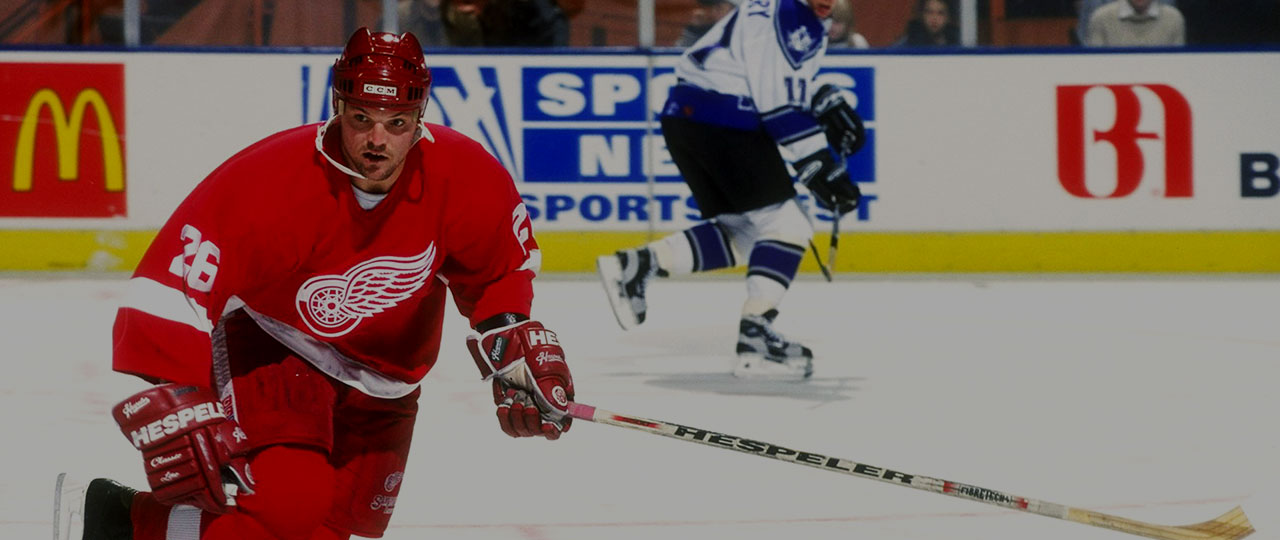
Every major hockey market has its traditions, but Detroit's is perhaps the most visually arresting: fans throw dead octopuses onto the ice. This practice, which would be alarming in any other context, is a cherished part of Detroit Red Wings playoff culture that has been repeated for over 70 years.
The origin story is specific and well-documented. In April 1952, Pete and Jerry Cusimano — brothers who operated a fish market in Detroit — threw an octopus onto the ice during a Red Wings playoff game. Their reasoning was precise: at the time, it took eight wins to win the Stanley Cup (two rounds, each a best-of-seven that was functionally played as a best-of-five). An octopus has eight tentacles. The Wings were on a roll. They went on to sweep their way to the championship that year, and the octopus became a symbol of playoff destiny.
The expansion of the playoff format from two rounds to four did not eliminate the tradition. If anything, it cemented it. The octopus became less about the literal math of championship wins and more about the act of superstitious offering — a tribute to the hockey gods, a declaration of intent, a communal ritual that the Detroit fanbase performed collectively and the rest of the league observed with a mixture of bewilderment and admiration. In the years when Gordie Howe, who won four Cups with the Red Wings, was the standard against which all Wings players were measured, the octopus throw felt like a connection to that legacy of championship expectation.
The NHL has, at various points, expressed mild official displeasure about organic matter being thrown onto ice surfaces. The tradition has persisted regardless. The arena staff in Detroit have become proficient at removing octopuses quickly. Former arena employees have described the smell of a playoff series in terms that suggest the practice has olfactory consequences. None of this has discouraged anyone.
Having Your Name on the Cup — and the Mistakes
Every year after the championship is decided, engravers employed by the Hockey Hall of Fame inscribe the names of the winning team's players, coaches, trainers, and front office personnel onto a new band on the Stanley Cup. This process is taken with enormous seriousness, as it should be — having your name on the Cup is permanent, documented, and visible to anyone who visits the Hall of Fame.
It is also, historically, a process that has produced an impressive number of errors.
The Cup carries several misspelled names that have been preserved rather than corrected. "Bqston Bruins" appears on the Cup's surface, the result of a moment of inattention that nobody caught before the engraving was complete. "Jacque Plante" appears instead of "Jacques Plante." A Detroit player whose name was rendered phonetically rather than accurately remains permanently misspelled. The general policy of the Hockey Hall of Fame is to preserve the errors as part of the history of the trophy rather than correcting them — which means that every person who visits the Hall can find the typos if they look carefully enough.
There are also names on the Cup that arguably should not be there — front office personnel who were let go before the championship was won, individuals whose contributions to the championship team are disputed, and at least a few cases of names added through the kind of organizational politics that exist in every professional sports organization. The Cup's criteria for inclusion have shifted over the decades.
Players who win multiple championships have their names on the Cup multiple times, across different bands, in different engravings from different years. Gordie Howe's name appears four times. Henri Richard won eleven championships and appears on eleven different bands. When the bands fill up — each band can hold approximately 52 names — they are retired to the Hockey Hall of Fame and a new band is added to the trophy. The retired bands are displayed at the Hall, meaning the complete record of every Stanley Cup winner since 1927 is preserved and publicly accessible.
The Superstitions Nobody Talks About
Hockey is, by any reasonable measure, the most superstition-saturated sport in professional athletics. The playoff beard and the conference trophy rule are the traditions that receive public attention, but they represent only the visible surface of a much deeper culture of ritualized behavior that governs how professional hockey players approach the game.
Players do not change equipment during a hot streak. Not gloves, not sticks, sometimes not even skate blades if everything is going well. A player who scores three goals in two games with a particular pair of gloves will continue wearing those gloves until they physically disintegrate, at which point they will try to find an identical replacement and will spend several games in a state of low-level existential anxiety. The equipment relationship in hockey is intimate in a way that the relationships between other athletes and their gear are not — the skates in particular are broken in over months and become an extension of the body.
Pregame meals are non-negotiable for many players. The same meal, at the same time, prepared in the same way, for every home game in a season. Some players maintain this routine across careers spanning twenty years. A hotel kitchen that cannot produce the specific meal faces a player who will eat something wrong and spend the game distracted by the wrongness of it.
Coaches have their own rituals, which tend to be somewhat more eccentric than players' because coaches have more time to think between shifts. Don Cherry, who coached some of the most beard-heavy Bruins teams of the early 1980s, was known for pregame routines that combined genuine tactical preparation with a set of behavioral patterns that his players understood were not optional to disrupt. The lineup card placement, the order of meetings, the specific phrases used in the pregame talk — all of these things exist on a spectrum from "genuine preparation" to "ritualized superstition," and the line between them is deliberately blurry.
At the deepest level, hockey's superstition culture reflects something true about the sport itself: it is a game of inches and milliseconds, where the margin between winning and losing is often not a question of skill or preparation but of a bounce off a post, a referee's decision in a critical moment, the trajectory of a puck that catches an edge. In that context, superstition functions as a way of asserting some kind of agency over a fundamentally chaotic series of outcomes. You cannot control where the puck goes after it hits the post. You can control whether you changed your gloves before the game. You did not change your gloves. You feel slightly better. You take your shift.
Frequently Asked Questions
When did the playoff beard tradition start?
The playoff beard tradition is most commonly traced to the 1980 New York Islanders, who began their dynasty run and stopped shaving collectively during the playoffs. Nobody ordered it — it just happened, they won four consecutive championships, and the tradition spread. By the late 1980s it was a league-wide custom. Today it is one of the most recognized sporting traditions in North America, observed by players across all teams regardless of personal grooming preference.
Why don't players touch the conference trophy?
Pure superstition. The belief is that touching the Clarence S. Campbell Bowl (Western Conference) or the Prince of Wales Trophy (Eastern Conference) after winning the conference championship will result in losing the Stanley Cup Final. The logic is that you are celebrating too early, tempting fate before the real prize is won. The tradition became universal through the 1990s and 2000s and is now so deeply embedded in hockey culture that even coaches, team executives, and veteran players who privately dismiss superstition will refuse to touch the conference trophies.
How many names are on the Stanley Cup?
The Stanley Cup carries over 2,500 engraved names of players, coaches, trainers, and team executives. The names appear on stacked bands around the base of the trophy. When a band is filled — approximately 52 names per band — it is retired to the Hockey Hall of Fame in Toronto and a new blank band is added. The retired bands remain on permanent display, meaning the complete record of every Stanley Cup championship from 1927 onward is preserved and accessible to the public.
Can anyone drink from the Stanley Cup?
Traditionally, only players, coaches, and staff of the championship team drink from it. In practice, the Cup has been used as a vessel for champagne, beer, orange juice, cereal and milk, and various other consumables over the decades. It has hosted baptisms, been used to feed dogs, and has appeared at parties where the guest list was not exactly restricted to NHL personnel. The Hockey Hall of Fame curator who accompanies the Cup during the summer tour is responsible for its safety but not, apparently, for controlling what gets poured into it.
Has the Cup ever been lost or damaged?
Yes, on multiple occasions. It has been left on the side of the road in Quebec City by a player whose car got a flat tire. It has been dropped, dented, and repaired repeatedly. Henri Richard was involved in an incident in 1924 (involving a different iteration of the Cup) where it was left near the Rideau Canal in Ottawa overnight. There are permanent dents on the base of the Cup that are preserved as historical artifacts rather than repaired. One player is said to have accidentally left it propped against a wall at a party, where it spent several hours before anyone noticed. The Cup's survival through a century of handling says something about the durability of silver, or perhaps about the particular nature of luck that seems to follow the trophy.
Related Stories
More from Slapshot Diaries
Beyond the stories — explore our guides to online entertainment in Canada.