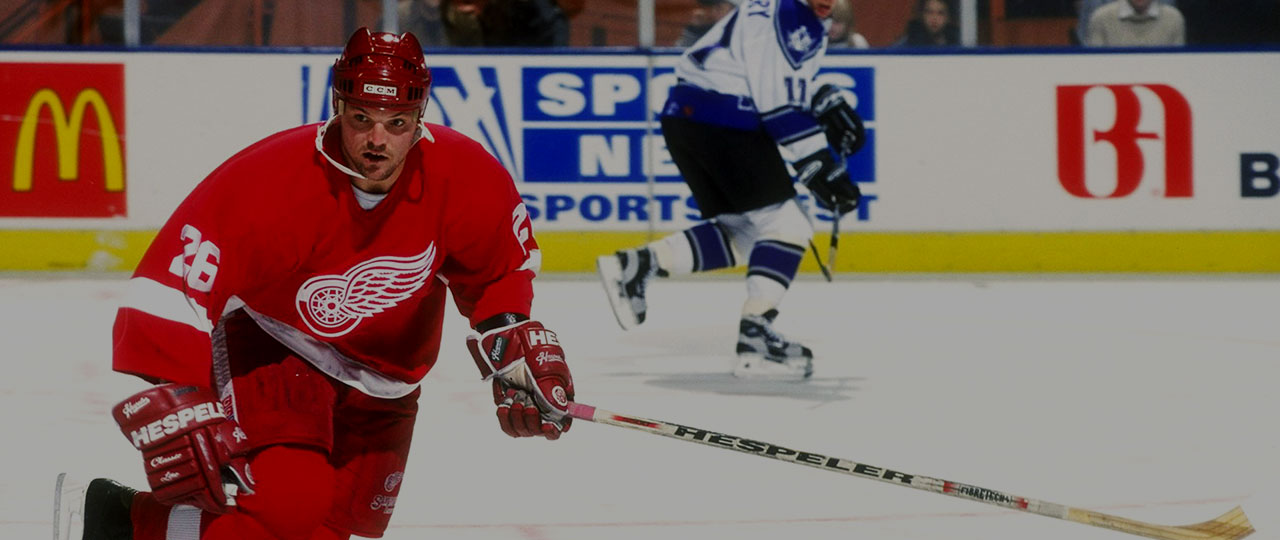

Coach, Commentator, and the Loudest Man in Canadian Hockey
Updated April 2026 — Expanded with a forensic reconstruction of the November 2019 Poppy Gate termination, the Sports with Don + Tim podcast era, and Cherry's cultural standing in 2026.
There has never been anyone quite like Don Cherry. Not in hockey. Not in Canadian media. Not anywhere. For more than three decades, he sat in a television studio wearing suits that looked like they were designed during a fever dream, and he told an entire nation what to think about their national sport. The remarkable thing wasn't that he did it. The remarkable thing was that most of them listened.
Cherry was a contradiction in almost every way. A man who never made it as an NHL player but became the most famous voice in hockey history. A coach who never won a Stanley Cup but is remembered more vividly than many who did. A patriot whose love of country became so fierce it eventually consumed his career. He was adored and despised, often by the same people, often in the same sentence.
This is the story of how a kid from Kingston, Ontario became the most powerful figure in Canadian hockey—and how it all came crashing down on a November night in 2019.
Before the suits, before the rants, before "Coach's Corner" became appointment viewing for an entire country, Don Cherry was a hockey player. And not a particularly successful one.
Born on February 5, 1934, in Kingston, Ontario, Donald Stewart Cherry grew up in a hockey-mad household. His father, Del, was a dedicated sports fan, and young Don took to the ice with the single-minded intensity that would define his entire life. He was tough, physical, and absolutely fearless. He was also, by his own admission, not especially talented.
"I could hit, I could fight, I could play defence," Cherry once said. "I just couldn't skate well enough to do any of it in the NHL."
The numbers tell the story. Over a 20-year professional career, Don Cherry played exactly one NHL game—a 1955 playoff contest with the Boston Bruins. One game. That was it. The rest of his playing days were spent grinding through the American Hockey League, primarily with the Hershey Bears, Springfield Indians, and other AHL outposts that dotted the northeastern United States.
In the AHL, Cherry was respected. He accumulated over 800 games and racked up penalty minutes at a rate that suggested he took the physical side of the game very seriously. He was a team leader, a locker room presence, the kind of player coaches trusted. But the NHL call never came. Not really.
"That one playoff game haunted him," a former teammate recalled. "He'd talk about it years later—not with bitterness, exactly, but with this awareness that he'd been right there. Right on the edge. And the edge was as far as he ever got."
The minor league years shaped everything that followed. Cherry developed an understanding of the game from the bottom up—not from the penthouse of NHL stardom but from the bus rides and cold arenas and two-dollar meal money of professional hockey's basement. He knew what it felt like to be overlooked. He knew what it meant to fight for every inch. And he carried that chip on his shoulder for the rest of his life.
Don Cherry's path to the Boston Bruins' bench was improbable. After retiring as a player, he coached in the minor leagues, working his way through the Rochester Americans and other AHL clubs. He was loud, demanding, and fiercely loyal to his players. His teams played hard. They fought. They won.
In 1974, the Bruins came calling. Boston had just lost Phil Esposito and Bobby Orr was battling the knee injuries that would soon end his career. The team needed an identity, and Cherry gave them one.
"Grapes changed the whole culture," said one former Bruins player. "Before him, we were a team that was trying to replace guys we couldn't replace. After him, we were a team that was going to outwork and outfight everybody. It was a completely different mindset."
Cherry's Boston teams were built on toughness. Players like Terry O'Reilly, Stan Jonathan, John Wensink, and Al Secord set the tone. They would skate through you, over you, or simply beat you up. The Bruins under Cherry made the playoffs every year, reaching the Stanley Cup Finals in 1977 and 1978, losing both times to the Montreal Canadiens dynasty.
Cherry won the Jack Adams Award as NHL Coach of the Year in 1976. His record behind the bench was extraordinary: 250 wins, 153 losses, and 77 ties across five seasons. But the stat that mattered most to Cherry was how hard his teams competed. He demanded full effort, every shift, every game. Players who didn't comply found themselves in the press box.
If Don Cherry's coaching career had a defining moment, it came on May 10, 1979. Game 7 of the Stanley Cup semifinals. Boston versus Montreal. The Bruins were winning 4-3 with under three minutes to play. The Forum was tense. A trip to the Finals was within reach.
Then it happened.
Too many men on the ice. A Bruins player jumped on while another hadn't come off. The referee's arm went up. Montreal scored on the power play—Guy Lafleur, of course—and then won in overtime.
"That penalty changed his life," observed a hockey writer who covered the Bruins. "Not just the game. His life. He carried it like a wound. Decades later, you could see it in his eyes when it came up. The moment everything almost happened."
Cherry was fired after the following season—a brief, unhappy stint with the Colorado Rockies in 1979-80. His NHL coaching career was over. He was 46 years old, and the best part of his life was about to begin.
The transition from fired hockey coach to television icon didn't happen overnight, but it happened faster than anyone expected. Cherry had done some local broadcasting in the early 1980s, and the CBC noticed what everyone who had ever met him already knew: the man was an absolute force of nature on camera.
In 1986, "Coach's Corner" was born. The format was simple: during the first intermission of Saturday night Hockey Night in Canada broadcasts, Cherry and host Ron MacLean would discuss the game, the league, and whatever else was on Cherry's mind. The segment was supposed to last a few minutes. It became the most-watched regular segment in Canadian television history.
For 33 years, every Saturday night, millions of Canadians tuned in to hear what Grapes had to say. He talked about hits. He talked about fights. He praised "good Canadian boys" and railed against European players he thought were soft. He championed the military. He told people to stand during the anthem. He wore suits that could be spotted from low orbit.
"You have to understand what Saturday night meant in Canada," explained a former CBC producer. "It was church. And Don was the preacher. People planned their evenings around Coach's Corner. It didn't matter if they agreed with him or hated him—they watched. Every single week."
No story about Don Cherry is complete without the suits. They began as merely bold and escalated into something approaching performance art. Floral prints. Plaid in colours that don't exist in nature. Collars that could pick up satellite signals. Ties that seemed to be in active combat with the jackets they accompanied.
Cherry's suits were custom-made, and he owned hundreds of them. They became such a cultural phenomenon that they were exhibited in museums. Children dressed as Don Cherry for Halloween. Drinking games were built around guessing what he'd wear next.
"The suits were genius, whether he planned it or not," said a media analyst. "They made him impossible to ignore. You'd flip past the intermission and see this explosion of fabric on your screen and you'd stop. Every time. That's a broadcaster's dream."
Every great act needs a foil, and Don Cherry found his in Ron MacLean. Where Cherry was bombastic, MacLean was measured. Where Cherry was certain, MacLean was questioning. Their on-screen chemistry was unlike anything in sports broadcasting—a genuine tension that crackled through the television.
MacLean was smart enough to let Cherry be Cherry, but brave enough to push back when he thought his partner had gone too far. Their disagreements were real. Their friendship was real too, though it was tested repeatedly over three decades of live television.
"Ron was the only person on television who could handle Don," noted a longtime Hockey Night producer. "Anyone else would have been steamrolled. Ron had the intelligence and the backbone to hold his own. The show doesn't work without him."
Don Cherry didn't just court controversy. He set up a permanent residence in it. Over 33 years of live television, he said things that made half the country cheer and the other half reach for their phones to call the CBC.
His targets were many and varied. European players were "soft" and wore visors because they were "chicken." French-Canadian players were routinely criticized. He railed against the instigator rule, which he blamed for the decline of fighting in hockey. He questioned whether women should be in NHL dressing rooms as reporters. He made political statements about the military, immigration, and Canadian identity that had nothing to do with hockey and everything to do with his worldview.
"Don said what a lot of people were thinking but were afraid to say," offered one defender. "That's what made him important."
"Don said things that were hurtful and divisive, and he used his platform to punch down," countered a critic. "That's not courage. That's bullying."
The truth, as usual, was somewhere in the complicated middle. Cherry was genuinely passionate about the military and about remembrance. His annual Remembrance Day segments were often moving, featuring real veterans and real stories. But his passion frequently bled into rhetoric that excluded the very people he should have been welcoming.
It ended on Remembrance Day. Of all the days.
During Coach's Corner on November 9, 2019, Cherry directed comments at immigrants, saying: "You people... love our way of life, love our milk and honey, at least you can pay a couple bucks for a poppy." The backlash was immediate and overwhelming.
By November 11, Sportsnet had terminated his contract. After 33 years, Coach's Corner was over. Don Cherry was off the air.
"It was like a death in the family," said one longtime viewer. "Even if you thought it was time, even if you agreed he'd gone too far—it was still the end of something. A part of Saturday night that had always been there suddenly wasn't."
Cherry himself never apologized. He maintained that his comments were directed at everyone who didn't wear a poppy, not specifically at immigrants. Many people believed him. Many others didn't. It hardly mattered. The damage was done, and the era was over.
If there was one cause Don Cherry championed above all others, it was the hockey enforcer. He was their loudest advocate, their most tireless defender, and in many cases, their friend.
Cherry's love of fighters went back to his playing days. He'd been a physical player himself, and he understood on a visceral level what it meant to put your body on the line every night. When the NHL began phasing out fighting, Cherry treated it as a personal betrayal.
"These guys are the heart and soul of the game," Cherry would say, pointing to men like Bob Probert, Tie Domi, and Dave Semenko. "You take fighting out of hockey, you take the soul out of the game."
He was particularly vocal in the debates that followed the deaths of enforcers like Derek Boogaard and the growing understanding of CTE. While others argued that fighting should be banned to protect players, Cherry insisted that fighting was protection—that without enforcers, star players would be targets.
"The irony is that Don genuinely cared about these guys," said a former enforcer who appeared on Coach's Corner multiple times. "He'd call them. Check on them after tough fights. When some of them were struggling after retirement, Don was one of the few people from the hockey world who reached out. He wasn't using them. He believed in them."
But the relationship was complicated. Cherry's championing of old-time hockey toughness contributed to a culture that celebrated violence, a culture that many now believe damaged countless lives. The men Cherry defended were often the ones who paid the highest price for the game's brutality.
As the stories of Cherry's era continued to emerge—the addiction, the depression, the early deaths—the question became harder to avoid: had Don Cherry's voice helped or hurt the people he claimed to love?
How do you measure the legacy of a man like Don Cherry? He changed Canadian broadcasting forever. He made hockey more exciting, more dramatic, more important to millions of people. He gave a voice to a blue-collar perspective that mainstream media often ignored. He raised awareness about the military and about remembrance in ways no other broadcaster could have.
He also divided people. He excluded people. He said things that were cruel and things that were wrong, and he did it with the confidence of a man who had never been told to sit down—or who simply refused to listen when he was.
"Don was Canada," said one observer. "Not the Canada we pretend to be—polite, inclusive, measured. The Canada we actually are, at least sometimes—loud, opinionated, stubborn, passionate, a little bit afraid of change."
In the years since his firing, Cherry has remained a public figure, though a diminished one. He does interviews. He appears at events. He has never, to anyone's knowledge, changed his mind about anything. This is either admirable or tragic, depending on who you ask.
What cannot be denied is the impact. An entire generation of Canadians grew up with Don Cherry as the voice of hockey. He shaped how they understood the game, who they cheered for, and what they valued. For better and for worse, he was ours—Canada's loudest, most outrageous, most impossible-to-ignore voice. And on Saturday nights, when the intermission comes and there's a panel of reasonable, careful analysts saying reasonable, careful things, something is missing.
Something loud. Something in a ridiculous suit. Something that made you lean forward and say, either in agreement or in fury: "Did he just say that?"
He did. He always did. And Canadian hockey will never be quite the same without him.
The final Coach's Corner of Don Cherry's career aired on Saturday, November 9, 2019. It was the weekend before Remembrance Day. Cherry, as he had for decades, used his platform to talk about poppies and military remembrance. What made this segment different - what turned it from another Cherry rant into the end of a 33-year career - was one specific construction he used.
"You people that come here," he said on-air, referring to new Canadians and immigrants in Mississauga and Toronto. "You love our way of life, you love our milk and honey. At least you could pay a couple of bucks for a poppy or something like that. These guys paid for your way of life that you enjoy in Canada. These guys paid the biggest price."
The phrase "you people" was the line that did it. By Sunday morning, the segment was viral. Every major Canadian news outlet had covered it by noon. The Canadian Broadcast Standards Council received a record number of complaints - more than any single broadcast in its history to that point. Petitions circulated demanding Cherry's dismissal. Petitions circulated defending him. Rogers Sportsnet, which held the Hockey Night in Canada broadcast rights, spent Sunday and Monday in crisis meetings.
Ron MacLean, who had sat beside Cherry during the segment and nodded, issued an apology Sunday night via Twitter. MacLean said he had failed to catch what Cherry was saying in the moment and that he deeply regretted not pushing back. The apology was received with mixed reaction - some felt it was too little, some felt MacLean had been put in an impossible position by his partner of three decades.
On Monday, November 11 - Remembrance Day itself - Sportsnet issued the statement. "Don is synonymous with hockey and has played an integral role in growing the game over the past 40 years. We would like to thank Don for his contributions to hockey and sports broadcasting in Canada." And then, the hammer: "Following further discussions with Don Cherry after Saturday night's broadcast, it has been decided it is the right time for him to immediately step down." The word "fired" was not used. Nobody needed it to be.
Cherry spoke to the Toronto Sun the same day. He was, characteristically, unrepentant. He said the comment was intended for all Canadians who don't wear poppies, not specifically for immigrants. He said he would have used the phrase "you people" about anyone - his own family, his own neighbours - who didn't honour remembrance. He refused to apologise. He has never apologised. In the years since, he has maintained that his words were misinterpreted and that the termination was a product of a culture that no longer tolerated his kind of speech.
The severance details were never publicly disclosed. Cherry was under contract through the end of the 2019-20 season. Industry sources suggested the package was substantial - appropriate to a decades-long broadcaster whose show had been one of the most-watched segments on Canadian television. But the financial outcome was always less important than the ceremonial one. For the first time since 1986, Coach's Corner did not air the following Saturday. And for the first time in the adult lives of tens of millions of Canadians, Saturday night hockey no longer included Don Cherry.
Most fired broadcasters go quiet. Don Cherry went podcasting.
In July 2020, eight months after his Sportsnet termination, Cherry launched "The Grapevine with Don Cherry" - later rebranded as "Sports with Don + Tim" - a weekly podcast co-hosted with his son Tim Cherry. The format was exactly what you would expect: Don holds court on hockey, politics, and whatever has irritated him in the previous seven days, while Tim plays the genial moderator role and occasionally tries to steer the conversation back toward less volatile topics.
The podcast has been a consistent success within its niche. Episodes regularly rank in the top 20 Canadian sports podcasts. The YouTube version has built up a loyal audience of several hundred thousand regular viewers. Cherry's 2019-21 political commentary, particularly during the COVID-19 pandemic, leaned heavily on his long-held scepticism of central authority and elite expert opinion - views that found a receptive audience among a segment of Canadian listeners who felt mainstream media had abandoned them.
Beyond the podcast, Cherry has maintained a modest public profile. He appeared in commercials for the Canadian Rangers - the military reserve force based in Canada's north - continuing his long-standing support for the Canadian Armed Forces. He has done occasional sponsorship work. He has appeared at Maple Leafs alumni events and at minor-league hockey games in Mississauga, where he lives. His dog Blue, the bull terrier who became a fixture of Coach's Corner's later years, passed away in 2019; Cherry acquired a new dog (also named Blue) and featured her on podcast episodes as a nod to the earlier era.
"The podcast gave him back his voice," a former colleague said. "Not the same platform - nothing was going to be Hockey Night in Canada at its peak - but something. And Don is not a man who can sit in silence. The fact that he had Tim to do it with him, that he could make it a family project, that mattered a lot to him."
The podcast has had its share of controversies. Episodes during the 2022 Freedom Convoy were particularly divisive, with Cherry openly supportive of the convoy's demands and critical of government responses. Other episodes - on hockey topics, on former teammates, on the state of the game - have been well-received even by listeners who disagree with his politics. The podcast, in short, is pure Cherry: the same polarising figure, on a smaller stage, with even fewer editorial guardrails than Coach's Corner had in its last years.
Don Cherry turned 92 years old on February 5, 2026. He remains publicly active. The podcast continues. The commercial appearances continue. The opinions continue, as they always have, regardless of audience reception.
His legacy, however, sits in an unusual place. The post-2019 consensus among Canadian sports media was that Cherry was a figure of another era - a broadcaster whose style, politics, and willingness to speak over marginalised voices had no place in modern discourse. That consensus has softened somewhat over the past few years, not because Cherry has changed but because the culture has continued to debate where exactly the lines should be drawn. His defenders argue he was a plain-spoken voice of a working-class perspective that mainstream Canadian media has never properly represented. His critics argue that his impact on the game - particularly on the celebration of fighting - contributed directly to the CTE crisis and to the deaths of multiple former enforcers including Derek Boogaard. Both arguments have merit. Neither is fully right.
The Hockey Hall of Fame eligibility debate remains open. Cherry is eligible in the Builder category, which does not have the same formal criteria as the Player category. Several Canadian sportswriters have advocated for his induction, arguing that his broadcasting career and his coaching record (Jack Adams Award, 1976) justify the honour independent of his politics. Other writers have argued the opposite - that the Hall of Fame should not be a reward for cultural influence that many Canadians experienced as harmful. As of 2026, no induction has occurred. Whether one will is a question that may ultimately be answered by who sits on the Hall's Selection Committee in the next decade.
For a generation of Canadian hockey fans, the absence of Don Cherry from Saturday night broadcasts is a settled fact. The intermission panels that replaced him are polite, well-informed, and utterly replaceable in memory. The thing Coach's Corner offered - the unpredictability, the crackle, the feeling that something might happen - has not been replicated. Whether that is a good thing or a bad thing depends on what you want from your hockey broadcasting. Many fans are relieved. Many fans still miss it. Both groups are watching the same game from the same country, trying to figure out what comes next.
The larger question - what Cherry meant for Canadian hockey broadcasting identity - is still being answered. His career covered almost exactly the period during which hockey broadcasting shifted from CBC's public-service model to Rogers' commercial model, from broadcast television to streaming, from a sport covered primarily in newspapers to a sport covered primarily on social media. Cherry spanned all of that. He was a bridge between eras and a figure who, in many ways, resisted the erosion of the era he came from. That resistance was part of his appeal. It was also, ultimately, part of why he could not survive the 2019 moment. Canadian hockey broadcasting in 2026 is a different institution than it was when Cherry started on Coach's Corner. Some of that is because of him, some in spite of him, and some because the world simply changed faster than any one broadcaster could adapt to.
| Full Name | Donald Stewart Cherry |
| Born | February 5, 1934 - Kingston, Ontario, Canada |
| Playing Career | 1954-1972 (AHL), 1 NHL playoff game (Boston Bruins, 1955) |
| Coaching Career | Boston Bruins (1974-1979), Colorado Rockies (1979-1980) |
| NHL Coaching Record | 250-153-77 |
| Awards | Jack Adams Award (Coach of the Year), 1976 |
| HNIC Tenure | 1986-2019 (33 seasons of Coach's Corner) |
| Signature Look | Flamboyant custom-made suits, high collars |
| Famous Catchphrases | "Let's go!", "Good Canadian boy", "Keep your head up, kids" |
| Known For | Defending enforcers, supporting the military, polarizing opinions |
Don Cherry was fired from Hockey Night in Canada on November 11, 2019, after making comments on Coach's Corner directed at immigrants regarding wearing poppies for Remembrance Day. Sportsnet terminated his contract after widespread backlash, ending his 33-year run on the program. Cherry never apologized for the remarks and maintained his comments were directed at all Canadians who don't wear poppies.
Don Cherry played just one NHL game in his entire career—a 1955 playoff game with the Boston Bruins. He spent the vast majority of his 20-year playing career in the AHL, where he played over 800 games as a tough, physical defenseman for teams including the Hershey Bears and Springfield Indians.
Coach's Corner was a segment on Hockey Night in Canada that aired during the first intermission of Saturday night NHL broadcasts. Featuring Don Cherry and host Ron MacLean, the segment ran from 1986 to 2019 and became one of the most-watched regular segments in Canadian television history. Cherry used the platform to share his opinions on hockey, the military, and Canadian culture.
No. Don Cherry's closest brush with the Cup came in 1979, when his Boston Bruins lost to the Montreal Canadiens in the Stanley Cup semifinals after the infamous "too many men on the ice" penalty in Game 7. He reached the Finals twice (1977 and 1978) but lost both times to Montreal.
Don Cherry coached the Boston Bruins from 1974 to 1979 and the Colorado Rockies (now New Jersey Devils) for one season in 1979-80. His overall NHL coaching record was 250-153-77. He made the playoffs in four of his five seasons with Boston and won the Jack Adams Award as Coach of the Year in 1976.
Don Cherry coached Bobby Orr briefly during Orr's final season with the Boston Bruins in 1974-75, though Orr's devastating knee injuries limited their time together. Cherry has always called Orr the greatest player in hockey history and frequently championed him on Coach's Corner. Their mutual respect was a recurring theme throughout Cherry's broadcasting career. Read more in our piece on Cherry, Orr, and Wearing the Maple Leaf.
No. Despite his enormous impact on the sport, Don Cherry has never been inducted into the Hockey Hall of Fame. He was inducted into the Ontario Sports Hall of Fame in 2015 and has received numerous other honours, but the Hockey Hall of Fame has not recognized him, which remains a point of contention among his supporters.
Think you know the game better than the oddsmakers? Put your hockey knowledge to work with Canada's best sportsbooks.