
Most Brutal Hockey Brawls
The 10 Fights That Shook the NHL and Changed the Rules Forever
Hockey has always been a violent game. The speed, the physicality, the confined space of the rink--it's a sport that runs on controlled aggression, and sometimes that control slips. When it does, the results can be spectacular, terrifying, and unforgettable. While individual hockey fights between enforcers are part of the game's fabric, the full-scale brawl is something different entirely. A brawl isn't a fight. It's a riot on ice.
These are the 10 most brutal hockey brawls in history--the nights when the game descended into chaos, when benches emptied and blood flowed, when the violence was so extreme that the NHL had no choice but to change its rules in response.
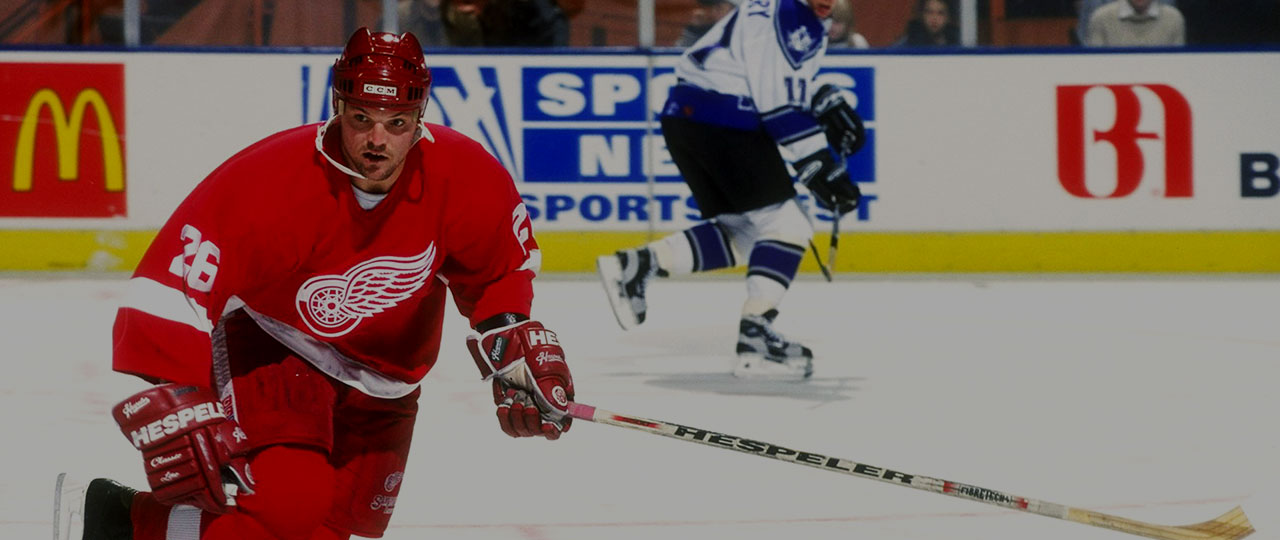
1. March 26, 1997 -- "The Brawl in Hockeytown" (Red Wings vs. Avalanche)
No list of hockey brawls can start anywhere else. The Red Wings-Avalanche rivalry was the most intense feud in modern hockey, and March 26, 1997 was its violent masterpiece.
The Backstory
On May 29, 1996, Colorado's Claude Lemieux had driven Detroit's Kris Draper face-first into the dasher boards, shattering his face. Draper suffered a broken jaw, broken cheekbone, and broken nose. The Avalanche won the series and the Stanley Cup. Detroit waited ten months for revenge.
What Happened
The game at Joe Louis Arena produced 9 separate fights and 148 penalty minutes. The centerpiece was Darren McCarty's beating of Claude Lemieux--a sustained, one-sided assault that Detroit fans had dreamed about for nearly a year. Lemieux turtled on the ice while McCarty rained down punches.
But the most iconic moment came when goaltender Patrick Roy skated the full length of the ice to fight Detroit goalie Mike Vernon at center ice. Two goalies, in full equipment, throwing haymakers under the bright lights. Vernon got the better of the exchange, bloodying Roy's face.
Other bouts included Brendan Shanahan vs. Adam Foote, Kirk Maltby vs. Claude Lemieux (again), and several undercard fights that kept officials scrambling all night.
To cap the evening, McCarty--the same man who had pummeled Lemieux--deked around Uwe Krupp and scored the overtime winner past Roy. It was the most complete individual performance in a single game in NHL history: avenger, fighter, and hero, all in one night.
Rule Changes
The brawl led to increased scrutiny of the instigator rule and discussions about mandatory suspensions for players involved in multiple fights during a single game. The NHL also began paying closer attention to retaliatory violence that stemmed from incidents in previous games.
2. April 20, 1984 -- "The Good Friday Massacre" (Canadiens vs. Nordiques)
Before Red Wings-Avalanche, the most bitter rivalry in hockey belonged to two teams from the same province: the Montreal Canadiens and the Quebec Nordiques. Their hatred was rooted in language, culture, and geography--Montreal's cosmopolitan francophone elite versus Quebec City's working-class separatists.
The Backstory
Game 6 of the 1984 Adams Division Final. The series had already been brutal, with fights and cheap shots escalating in every game. The Nordiques led the series 3-2 and were looking to close out Montreal at the Forum.
What Happened
The game produced 252 penalty minutes, 10 game misconducts, and multiple brawls that stopped play for extended periods. The worst of it came in the second period, when a fight between players sparked a bench-clearing brawl that took officials nearly 45 minutes of real time to sort out.
The brawl featured some of the toughest players of the era. Chris Nilan, Montreal's feared enforcer known as "Knuckles," was in the thick of it. Dale Hunter and Louis Sleigher were among the Nordiques' most willing combatants. The violence was indiscriminate--skill players, enforcers, and even backup goalies were involved.
The most controversial incident: Louis Sleigher punched Jean Hamel so hard that Hamel suffered a career-ending eye injury. One punch ended a man's hockey career.
Montreal won the game 5-3 and the series, but the victory was overshadowed by the violence. The Good Friday Massacre became the standard against which all future NHL brawls would be measured.
Rule Changes
The Good Friday Massacre led directly to the implementation of the automatic suspension rule for players who leave the bench to join a fight. The rule, which carries a minimum 10-game suspension, effectively ended the era of bench-clearing brawls in the NHL. It remains one of the most significant rule changes in league history.
3. March 5, 2004 -- Flyers vs. Senators (419 Penalty Minutes)
The numbers tell the story: 419 penalty minutes in a single game. It remains the NHL record and will likely never be broken.
The Backstory
The Philadelphia Flyers and Ottawa Senators had developed a heated rivalry in the early 2000s, fueled by multiple playoff meetings and a collection of tough customers on both rosters. The Flyers, true to their Broad Street Bullies heritage, had players like Donald Brashear, Todd Fedoruk, and Patrick Sharp. The Senators had Rob Ray, Brian McGrattan, and Chris Neil.
What Happened
The game was a blowout, with Philadelphia leading comfortably. But in the third period, the Senators--frustrated and angry--began challenging Flyers players to fight. What followed was a cascade of brawls that produced 20 fighting majors.
The most notable aspect was the sheer volume. Fights broke out continuously in the final minutes. Every tough guy on both rosters fought. Then the semi-tough guys fought. Then players who had never fought in their careers dropped the gloves. Even the goalies--Robert Esche for Philadelphia and Patrick Lalime for Ottawa--fought each other.
The final penalty summary read like a war report: 419 total penalty minutes, 20 fighting majors, 5 game misconducts, and 8 10-minute misconducts. The game took over four hours to complete.
Rule Changes
The Flyers-Senators brawl strengthened calls for a crackdown on fighting that had been building for years. While the NHL didn't ban fighting outright, the 2004-05 lockout that followed resulted in a new collective bargaining agreement that included provisions making it easier to suspend and fine players for excessive violence.
4. December 23, 1979 -- Bruins Climb Into the Stands at MSG
This one transcended hockey. This was the night an NHL team went to war with the fans.
The Backstory
The Boston Bruins were playing the New York Rangers at Madison Square Garden. The Bruins of this era were a tough, physical team led by Terry O'Reilly, one of the most feared fighters in the league. The atmosphere at MSG was always hostile for visiting teams, and on this night, the hostility would reach unprecedented levels.
What Happened
Late in the game, a fight broke out on the ice between the Bruins and Rangers. During the scuffle, a fan in the stands reached over the glass and stole a Bruins player's stick. Another fan hit a Bruins player. That was enough for Terry O'Reilly.
O'Reilly climbed over the glass and into the stands. Several teammates followed him, including Mike Milbury, Peter McNab, and others. What followed was a scene that had never been witnessed in professional hockey: NHL players fighting fans in the stands at Madison Square Garden.
The most infamous moment: Mike Milbury grabbed a fan's shoe and beat him with it. The image of a professional hockey player using footwear as a weapon against a spectator became one of the most replayed clips in sports history.
"I'm not proud of it," Milbury said years later. "But that fan hit one of our guys. In our minds, at that moment, the stands were just an extension of the ice. You hit one of us, you answer for it."
Four Bruins players were arrested, though charges were eventually reduced or dropped. The incident became a national news story and forced the NHL to confront the safety of its arenas.
Rule Changes
The Bruins-fans brawl led to mandatory security improvements at all NHL arenas, including higher glass partitions and increased security personnel. The league also implemented harsher penalties for players who enter the stands, including automatic suspensions and potential criminal charges.
5. January 4, 1987 -- "Punch-Up in Piestany" (Canada vs. Soviet Union)
While not an NHL brawl, the Punch-Up in Piestany is the most infamous bench-clearing brawl in the history of hockey, period.
The Backstory
The 1987 World Junior Championship in Piestany, Czechoslovakia. Canada vs. the Soviet Union. Cold War on ice. Both teams were in contention for gold, and the game was intensely physical from the opening faceoff.
What Happened
With 6:07 remaining in the second period and the score tied 4-4, a series of altercations erupted into a full bench-clearing brawl. Every single player from both teams was on the ice fighting. The melee lasted approximately 20 minutes.
Unable to restore order, referee Hans Ronning instructed arena officials to turn off the lights. The arena went dark. The players kept fighting anyway.
Future NHL stars involved: Brendan Shanahan, Theoren Fleury, Pierre Turgeon, and Jimmy Carson for Canada. Sergei Fedorov, Alexander Mogilny, and Vladimir Konstantinov for the Soviet Union.
Both teams were disqualified from the tournament. Canada lost a gold medal. The brawl became the most replayed hockey clip in Canadian television history and, ironically, turned the World Junior Championship into a national obsession.
Rule Changes
The IIHF implemented automatic disqualification for any team involved in a bench-clearing brawl in international competition. Penalties for fighting in international hockey were increased dramatically. The incident also led to stricter screening of coaches and a cultural shift in how Hockey Canada approached international tournaments.
6. November 1, 1963 -- Canadiens vs. Rangers (The Original Line Brawl)
Long before modern hockey brawls, there was this: the night that all five Montreal Canadiens on the ice fought all five New York Rangers simultaneously.
The Backstory
The 1960s NHL was a six-team league where players faced each other 14 times per season. Personal grudges festered and grew. The Canadiens and Rangers had been building toward a confrontation for weeks, with cheap shots and retaliatory hits escalating in every meeting.
What Happened
In the second period, a minor altercation escalated until every player on the ice was paired off and fighting. This was before the era of visors and helmets--bare fists met bare faces. The brawl was notable not for its duration but for its totality: every single skater on the ice was engaged in combat at the same time.
The fight featured some of the era's toughest competitors, including Montreal's John Ferguson Sr.--one of the original NHL enforcers--and several Rangers who were more than willing to throw down. The crowd at Madison Square Garden was equal parts horrified and thrilled.
"Back then, you didn't have enforcers the way you did later," recalled one observer. "Every guy on the roster had to be able to handle himself. When five on five fighting broke out, it wasn't a surprise. It was just hockey."
Rule Changes
The brawl contributed to the eventual development of the third-man-in rule, which penalizes any player who joins an ongoing fight between two other players. Though the rule wasn't formally implemented for several more years, incidents like this one demonstrated the need to prevent small fights from becoming full-scale wars.
7. March 11, 2007 -- Sabres vs. Senators (Chris Neil vs. the Sabres)
A single hit created a chain reaction that turned a regular-season game into one of the most violent nights of the 2000s.
The Backstory
The Buffalo Sabres and Ottawa Senators were both contenders in the Eastern Conference, and their games had become increasingly physical. Ottawa's Chris Neil was one of the last true NHL enforcers--a player whose job was to intimidate, hit, and fight.
What Happened
Neil delivered a devastating open-ice hit on Sabres defenseman Brian Campbell that the Buffalo bench considered dirty. The Sabres responded immediately. Andrew Peters went after Neil, and the resulting fight sparked a chain reaction that saw multiple brawls break out.
The game produced over 100 penalty minutes and featured some vicious fights. Peters, Buffalo's enforcer, fought multiple times. Neil answered every challenge. The Sabres' frustration boiled over as player after player tried to make the Senators pay for the Campbell hit.
The Campbell hit itself was borderline--a hard, clean shoulder check that caught Campbell with his head down, according to some observers, or a predatory hit on a vulnerable player, according to others. The debate fueled the brawl and continued long after the game ended.
Rule Changes
The incident added fuel to the ongoing debate about the legality of hits to the head in the NHL. While specific rule changes weren't immediately implemented from this single game, it was part of a larger pattern that eventually led to Rule 48--the ban on blind-side hits to the head--which was introduced in 2010.
8. October 26, 2001 -- Flyers vs. Senators (The Preseason Preview)
A preseason exhibition game. The results don't count. Neither team can be eliminated. And yet, the Philadelphia Flyers and Ottawa Senators staged one of the most violent hockey games in memory.
The Backstory
The Flyers and Senators had met in the 2000 playoffs, and the series had been nasty. Philadelphia's roster was stocked with fighters--Donald Brashear, Todd Fedoruk, Luke Richardson. Ottawa had their own tough guys. A preseason rematch was all the excuse both teams needed.
What Happened
The game produced an astonishing 24 fighting majors--in a preseason game. The brawls started early and never stopped. Both coaches seemingly gave their fighters the green light to settle every score from the previous season's playoffs.
Donald Brashear was at the center of the carnage. The Flyers enforcer, one of the most feared fighters of his era, fought multiple times and dominated each bout. On the Ottawa side, players answered the bell repeatedly, knowing that backing down would set a tone they couldn't afford heading into the regular season.
"It was a preseason game, and it was more violent than any playoff game I've ever been in," said one participant. "The coaches wanted to send a message. And the message was received."
The spectacle was so excessive that it drew condemnation from the league office. Exhibition games were supposed to be about evaluating young players, not staging gladiatorial combat.
Rule Changes
The game led to increased league oversight of preseason games and discussions about limiting fighting in exhibitions. The NHL began monitoring preseason matchups more closely and warned teams about excessive violence in games that didn't count in the standings.
9. January 4, 1987 -- Bruins vs. Nordiques (The Pre-Game Brawl)
A brawl that started before the game even began. During the pre-game warmup. On an epic day that shared the date with the Piestany incident halfway around the world.
The Backstory
The Boston Bruins and Quebec Nordiques had a simmering feud built on previous games' altercations. Both teams had enforcers who had unfinished business. The pre-game warmup, normally a routine and peaceful exercise, became a battlefield.
What Happened
During the pre-game warmup, players from both teams began exchanging words. The words became shoves. The shoves became punches. Within minutes, a full-scale brawl had erupted on the ice--and the game hadn't even started.
The brawl lasted approximately 20 minutes and involved players from both teams who had come out for the warmup. Officials, who weren't expecting to have to manage violence before the opening faceoff, were caught off guard. Security personnel had to be called from throughout the arena to help separate the combatants.
The irony of the date was not lost on hockey historians: on the same day that the Punch-Up in Piestany was occurring in Czechoslovakia, the Bruins and Nordiques were staging their own brawl before the puck had even dropped in North America.
Multiple players were ejected before the game began, and the already thin rosters were further depleted by suspensions. The game itself, when it finally started, was played under extraordinarily tense conditions with both teams short-handed from the warmup ejections.
Rule Changes
The pre-game brawl led to rules about player conduct during warmups. Teams were required to take the ice for warmup at staggered times or on separate halves of the rink. Officials were instructed to be present during warmup periods. These changes remain in effect today--teams warm up on their own half of the ice in part because of what happened that day in Boston.
10. April 20, 1984 -- Canadiens vs. Nordiques Game 6 (The Easter Epic's Violent Encore)
The Good Friday Massacre (also on this list at #2) happened during Game 6 of the Adams Division Final. But the violence didn't end there. What many people forget is that the series had already produced extraordinary violence in earlier games, and the aftermath of Game 6 continued the bloodshed.
The Backstory
The Canadiens-Nordiques rivalry was, by 1984, the most poisonous in hockey. The two Quebec teams represented different visions of French-Canadian identity, and their players genuinely hated each other. The 1984 playoff series was the culmination of years of escalating hostility.
What Happened
While the Good Friday Massacre (Game 6, April 20) gets the headlines, the entire series was a bloodbath. Games 1 through 5 had already featured numerous fights and cheap shots. The referees had lost control of the series long before the Good Friday game.
In the aftermath of Game 6, the violence continued off the ice. Players from both teams exchanged threats in the media. Fans in Quebec City directed death threats at Montreal players. The rivalry had become so toxic that the NHL assigned its most experienced officials to Game 7, hoping to prevent another catastrophe.
Game 7 was tense but relatively controlled--the Good Friday suspensions had depleted both rosters, and the remaining players were aware that the hockey world was watching. Montreal won and advanced, but the damage to the league's reputation had been done.
The 1984 Canadiens-Nordiques series produced a combined over 500 penalty minutes across the seven games, with multiple players suspended. It was the most violent playoff series in NHL history and remains the standard against which all other violent series are measured.
Rule Changes
Beyond the bench-clearing brawl rules that came from Game 6, the overall violence of the 1984 series led to a comprehensive review of playoff officiating standards. The NHL developed protocols for assigning officials to high-tension series and gave referees more authority to assess game misconducts for retaliatory actions. The supplemental discipline system was also strengthened, allowing the league to suspend players between games for actions that referees had missed or under-penalized during play.
The Common Thread: Why Brawls Changed the NHL
Every brawl on this list shares something in common: they all made the NHL uncomfortable enough to change its rules. Fighting between two willing combatants has always been part of hockey's culture. But brawls--full-scale, multi-participant riots involving entire teams--crossed a line that even the NHL couldn't ignore.
The evolution is clear. In the 1960s and 1970s, bench-clearing brawls were common. By the 1980s, the Good Friday Massacre and Piestany incident forced rule changes that made them rarer. By the 2000s, the Flyers-Senators games showed that even without bench-clearing incidents, the violence could reach unacceptable levels. Today, brawls of this magnitude are essentially impossible under the current rule structure.
"The game policed itself out of existence," observed one former enforcer. "Every time there was a brawl, they made a new rule. Enough new rules, and eventually you can't brawl anymore. Maybe that's for the best. Maybe it isn't. But the game we grew up with--the game where this stuff happened--is gone."
The decline of fighting in hockey is, in many ways, the direct result of these ten incidents. Each brawl pushed the NHL closer to the modern game, where speed and skill have replaced toughness and intimidation as the primary currencies.
But the stories endure. McCarty pummeling Lemieux. The lights going out in Piestany. Milbury's shoe. Roy skating the length of the ice to fight Vernon. These moments are woven into the fabric of hockey history, and no rule change can erase them from the memories of the fans who witnessed them.
As Tie Domi once put it: "You can change the rules all you want. You can't change what happened. And what happened was incredible."
Frequently Asked Questions
What was the most violent hockey brawl in NHL history?
By the numbers, the March 5, 2004 brawl between the Philadelphia Flyers and Ottawa Senators holds the record with 419 penalty minutes. However, many consider the March 26, 1997 "Brawl in Hockeytown" between Detroit and Colorado to be the most significant due to its backstory of revenge for Claude Lemieux's hit on Kris Draper, the Roy-Vernon goalie fight, and McCarty's overtime winner.
What was the Good Friday Massacre in hockey?
The Good Friday Massacre occurred on April 20, 1984, during Game 6 of the Adams Division Final between the Montreal Canadiens and Quebec Nordiques. The game featured 252 penalty minutes, 10 game misconducts, and brawls that took officials nearly 45 minutes to sort out. Louis Sleigher's punch ended Jean Hamel's career with an eye injury.
Why did a Bruins player beat a fan with his own shoe?
On December 23, 1979, after a fan at Madison Square Garden stole a player's stick and struck a Bruins player, Mike Milbury and several teammates climbed into the stands. Milbury grabbed a spectator's shoe and hit him with it, creating one of the most infamous images in sports history. Four Bruins players were arrested.
What is the NHL record for penalty minutes in a single game?
The NHL record is 419 penalty minutes, set on March 5, 2004, during a game between the Philadelphia Flyers and Ottawa Senators. The game featured 20 fighting majors, multiple brawls, and a goalie fight between Robert Esche and Patrick Lalime.
What rule changes resulted from NHL brawls?
Major rule changes include: the third-man-in rule, automatic suspensions for leaving the bench to fight (minimum 10 games), the instigator penalty, increased arena security requirements, staggered warmup times, stricter playoff officiating protocols, and enhanced supplemental discipline systems. Together, these rules have made large-scale brawls essentially impossible in modern hockey.
Related Stories
- Red Wings vs. Avalanche: Hockey's Greatest Rivalry
- The Punch-Up in Piestany: The Full Story
- The 30 Greatest Hockey Fights of All Time
- Bob Probert: The Life and Death of Hockey's Toughest Enforcer
- How Enforcers Have Evolved in Hockey
- Tie Domi: The Albanian Assassin
Love Hockey? Try Hockey Betting
Think you know the game better than the oddsmakers? Put your hockey knowledge to work with Canada's best sportsbooks.