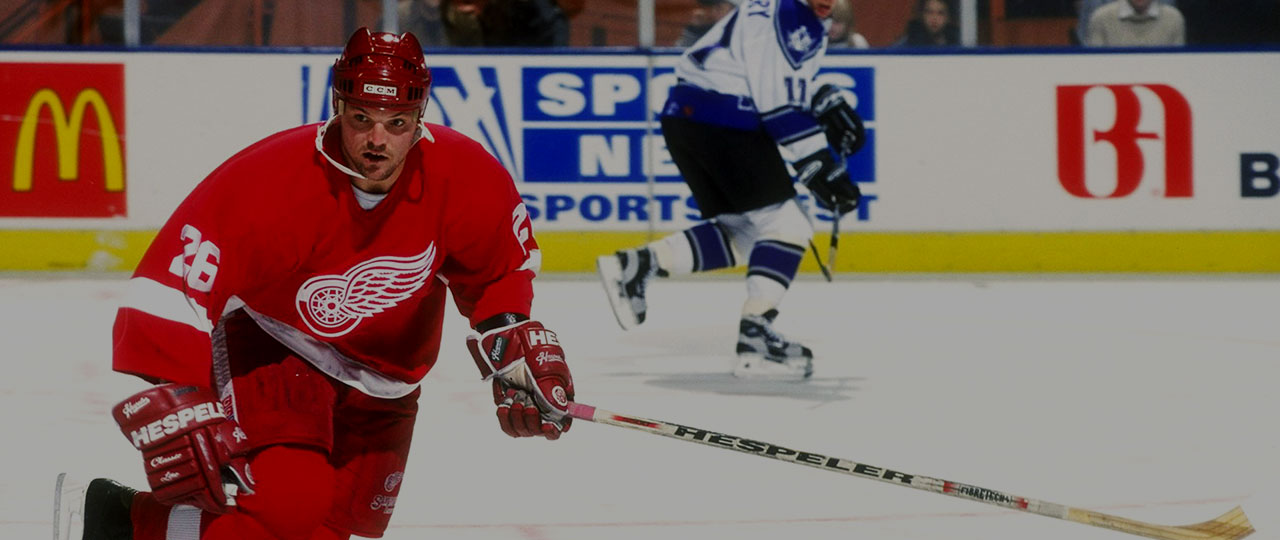

Kings vs. Canucks
The Pacific Division War, 2010-2014, When the West Coast Was the Whole Sport
For five years, roughly from 2010 to 2014, the best hockey in North America was being played on the West Coast. It was not being played in the Detroit-Colorado mould, with bench-clearing brawls and generational hatred. It was being played in a more modern register - possession battles, goalie duels, elite systems coaching, and a constant undercurrent of personal animosity that never quite became a full bench-clearer but never stopped simmering either. The two teams at the heart of all of it were the Los Angeles Kings and the Vancouver Canucks.
This is the story of a rivalry that was shorter than Detroit-Colorado, shorter even than Battle of Alberta, but every bit as intense while it lasted. It was the last great rivalry of the pre-expansion, pre-Vegas Pacific Division. It produced two Stanley Cups, one Presidents' Trophy winner's humiliating first-round exit, a generational coaching feud, and a series of post-whistle scrums that ended careers. And then, almost as quickly as it began, it was over.
How the Rivalry Was Built
You cannot fake a rivalry. You need history, you need stakes, and you need the right villains. By the time the Kings and Canucks started their run at each other in 2010, all three ingredients were in place.
The Canucks had been the dominant team in the Pacific Division for most of the 2000s. The Sedin twins - Daniel and Henrik, the most telepathic forward combination in the sport - had arrived as stars. Roberto Luongo was in his prime. Ryan Kesler was a Selke candidate. The team had beaten the Blackhawks in a memorable 2011 playoff series and reached the Stanley Cup Final, losing to Boston in seven in a loss that still haunts Vancouver fans. In 2010-11 and again in 2011-12, Vancouver won the Presidents' Trophy as the league's best regular-season team.
The Kings, meanwhile, were a team on the rise. Dean Lombardi had quietly assembled one of the deepest rosters in the NHL. Anze Kopitar was a true number-one centre. Drew Doughty was a Norris-calibre defenceman at 22. Jonathan Quick had developed into an elite goaltender. Dustin Brown was the captain with an edge. In December 2011, with the Kings sitting below .500, Lombardi fired coach Terry Murray and hired Darryl Sutter. The franchise was transformed inside a month.
Suddenly, two teams with overlapping geography, overlapping playoff ambitions, and overlapping personality clashes were in the same division. The matches started happening four, five, six times a year. The stakes kept escalating. And the personal stuff - which is always what turns a matchup into a rivalry - started piling up.
The Coaches: Sutter and Vigneault
No understanding of the Kings-Canucks rivalry is complete without understanding its two head coaches.
Darryl Sutter is the sixth of seven Sutter brothers, a farmboy from Viking, Alberta, with one of the most distinctive coaching personalities in modern hockey. Sutter's teams played a specific kind of game: heavy, punishing, structured, and based on puck possession in the offensive zone. He was also famously sparse in press conferences - his answers clipped, his scowl permanent, his willingness to engage with narrative almost zero. Sutter's 2011-12 Kings were the team that embodied his philosophy perfectly. They finished the regular season as the eighth seed. They entered the playoffs as the most underestimated 95-point team in recent memory.
Alain Vigneault, the Canucks coach from 2006 to 2013, was Sutter's opposite. Quebec-born, media-polished, system-oriented but with a finesse bias - Vigneault's Canucks played a skill-first game built around the Sedins, Kesler, and later Alex Burrows. Vigneault won the Jack Adams Award in 2007 and coached Canada at the World Championships. He was the architect of Vancouver's 2011 Cup Final run. He was also, increasingly, the coach of a team that kept running into a Kings team that was built to beat them.
The coaching chess between Sutter and Vigneault became its own story. Matchups. Last-change advantage. The handling of Ryan Kesler against Kopitar. Whether to dress Sami Salo or Keith Ballard on the third pair. Every Kings-Canucks game felt like a board game between two coaches who understood each other's tendencies perfectly and who each thought they had the answer.
"Vig and Sutter were the two best coaches on the West Coast for a three-year stretch," a former Pacific Division player said. "Their teams were built differently. Their systems were different. But they respected each other. You could see it in how those teams prepared for each other - nothing was left to chance."
The Sedins vs. Kopitar and Doughty
At the skater level, the rivalry's central matchup was the Sedins against the Kopitar line, with Drew Doughty and Jake Muzzin on the back end handling whatever the twins threw at them.
Daniel and Henrik Sedin are one of the strangest and most beautiful player duos in hockey history. Telepathic passing. A refusal to engage with anything resembling aggression. Henrik won the Art Ross and Hart trophies in 2009-10. Daniel won the Art Ross in 2010-11. They played almost every shift together for two decades.
Anze Kopitar, meanwhile, was a 6'3" Slovenian centre who played a 200-foot game and shut down opposing top lines while still producing 70-plus points a year. His matchup against the Sedins was one of the great tactical rivalries of the era. Kopitar would hound Henrik through the neutral zone. Doughty would close gaps early. The Kings' defensive structure was designed specifically to deny the Sedins the kind of space they needed to operate.
"Playing against Kopitar wore you out," a Canucks player recalled. "He wasn't running you over like some of the old-school checkers. He was just constantly in the right spot. By the second period, your line was exhausted. By the third, you were losing puck battles you usually won."
The Agitators: Lapierre, Bieksa, Brown, Stoll
Rivalries need villains, and the Kings-Canucks matchup had plenty on both sides.
Vancouver had Maxim Lapierre, the Quebec-born agitator who had made a name for himself in Montreal and then in Anaheim before landing with the Canucks. Lapierre lived under opponents' skin. He yapped. He took cheap shots. He also scored important goals - his overtime winner in Game 5 of the 2011 Conference Final against San Jose lives forever in Vancouver hockey memory. But against the Kings, Lapierre was pure irritant. Post-whistle scrums, crosschecks, face-washes, and an endless supply of French-accented trash talk.
Kevin Bieksa was the Canucks' most dangerous defenceman in the physical sense. Big, mean, willing to drop the gloves, and with a scoring touch that showed up in big moments (see: his double-overtime goal against San Jose in the 2011 Conference Final clincher). Against Los Angeles, Bieksa was in a constant verbal war with Dustin Brown. The two captains did not like each other. Their exchanges in the defensive zone were legendary inside the sport.
Los Angeles had Dustin Brown, whose hit on Henrik Sedin in a 2012 regular-season game became rivalry canon. Brown's hits were always borderline. Some people thought he charged. Some people thought he extended the elbow. What everybody agreed on was that he finished his check every single time and that the Canucks bench lost its mind whenever he did. Brown was also the Kings' captain and the emotional leader of two Stanley Cup-winning rosters.
Jarret Stoll was the Kings' designated physical centre - a big-body, clutch-faceoff guy who once broke up a Lapierre verbal barrage with a cross-check that drew a match penalty. Stoll and Lapierre were the mid-level rivalry ignition switches. They triggered each other. Their coaches sent them out specifically to trigger each other. It worked.
2012 First Round: The Upset That Defined the Rivalry
The 2011-12 Vancouver Canucks won 51 games and 111 points, finishing first in the Western Conference for the second consecutive season. They were the defending conference champions. They had their entire core intact. They were a consensus Stanley Cup favourite.
They drew the Kings, the eighth seed, in the first round. And then they got swept aside in five games.
The series was over almost before Vancouver realised it had started. The Kings won Game 1 in Vancouver 4-2. They won Game 2, 4-2 again. They won Game 3 at Staples Center 1-0 in overtime on a Jarret Stoll goal. They lost Game 4 3-1, then closed it out in Game 5 with a 2-1 win in Vancouver.
Jonathan Quick was superhuman. Kopitar's line neutralised the Sedins. The Kings' forecheck - the Sutter specialty - ground the Canucks into submission. Vancouver scored eight goals in five games. Kesler was hurt. Luongo had a shaky series and got pulled for Cory Schneider late. The Presidents' Trophy winner, eliminated in five, at home.
"That series broke something in the Canucks organisation," a Vancouver media analyst said. "Not just the season. Something bigger. The core never really recovered from that feeling. The Kings were not better than us on paper. They just were better that spring. And they kept being better for the next two years."
The Kings went on to win the 2012 Stanley Cup - their first in franchise history - losing just four total playoff games across four rounds. The performance remains one of the most dominant playoff runs in modern NHL history.
The 2012-13 Regular Season: The Rivalry at Full Volume
The shortened, lockout-affected 2012-13 season was when the Kings-Canucks rivalry hit peak regular-season intensity. Every matchup was televised nationally. Every game produced headlines. Post-whistle scrums. Lapierre getting run by Stoll. Bieksa and Brown exchanging elbows after a Canucks power play. Kopitar scoring to make it 3-1 and the building going silent.
The Canucks won the Northwest Division that year. The Kings won the Pacific. They met in the first round of the 2013 playoffs - and this time Los Angeles won in five games again. Quick was still Quick. Sutter still had Vigneault's number. The Canucks were still struggling to score on the Kings' heavy forecheck.
The 2013 series was where the personal stuff between players genuinely peaked. Bieksa and Brown had a full-blown fight in Game 4. Lapierre took runs at Stoll and Slava Voynov. The Sedins were held to one goal combined in five games. It was a rivalry at the moment of maximum temperature.
After that series, Vigneault was fired by Vancouver. The Canucks' window was visibly closing. The Kings' window had just opened.
2014: The Second Cup, and the End of the Rivalry
The 2014 season broke the rivalry's back in the most unusual way - not through another playoff series but through Vancouver's complete collapse and the Kings' continued dominance.
Vancouver missed the 2014 playoffs. John Tortorella, hired to replace Vigneault, imploded the room and was gone after a single season. The Sedins, both into their 30s, began the slow decline of their offensive production. Kesler asked for a trade. Luongo was traded back to Florida. The Canucks were, by the 2014-15 season, a team without a clear identity.
The Kings, meanwhile, won their second Stanley Cup in three years in 2014, beating the Rangers in the Final in five games after a harrowing seven-game Western Conference Final against Chicago. Quick was elite. Kopitar was dominant. Marian Gaborik, acquired mid-season, gave the Kings the high-end finisher they had always lacked. The franchise was the gold standard of the Pacific.
With Vancouver in decline, the rivalry's oxygen was gone. The personal feuds with Lapierre (traded out of Vancouver in 2014) and Bieksa (traded to Anaheim in 2015) lost their home-ice context. Sutter coached three more seasons. Vigneault went to the Rangers. The rivalry's central characters were scattered.
Post-2014: The Cool-Down
From 2014 to the present, Kings-Canucks games have been regular-season hockey without the playoff urgency. Both franchises have gone through their own independent rebuilds. The Canucks landed Elias Pettersson and Quinn Hughes. The Kings drafted Quinton Byfield and retained Kopitar into his late 30s as a kind of generational bridge. When the two teams play now, there is a residual awareness of what 2010-2014 meant. But there is no active combustion.
This is the natural lifecycle of a modern rivalry. In the Original Six era, a rivalry like Canadiens-Bruins could persist for decades because the same core players stayed in the same cities for entire careers. In the modern cap era, windows close. Stars move. Rosters turn over every 36 months. The Kings-Canucks rivalry was a four-year flame, not a four-decade slow burn. But while it was burning, it was the best show in the sport.
Legacy: What the Rivalry Meant
The Kings-Canucks rivalry of the early 2010s had significance beyond its direct participants. It was the last great rivalry of the eight-team Pacific Division - the version that included the Coyotes in Phoenix and that did not yet include Vegas or Seattle. It helped cement Jonathan Quick's legacy as a generational goaltender. It produced two Stanley Cup-winning Kings rosters that are still remembered as possession-hockey templates. And it produced, in Vancouver, the lingering question of what might have happened if the 2011 Canucks had won that Game 7 in Boston and the confidence had not been drained before the Kings showed up the following spring.
Compared to the old-school violence of Red Wings vs. Avalanche, the Kings-Canucks feud was a more modern kind of rivalry - tactical, contained, expressed through possession metrics as much as through fists. But it still featured plenty of the traditional elements. Fights happened. Scrums happened. Enforcers had roles, even if those roles had narrowed. The ingredients were recognisable to any fan of the old rivalries. The proportions had just changed.
Kings-Canucks Rivalry: Quick Facts
| Peak Era | 2010-2014 |
| Division | Pacific (Western Conference) |
| Playoff Series | 2 (2012: LA 4-1, 2013: LA 4-2) |
| Stanley Cups (Kings) | 2 (2012, 2014) |
| Stanley Cup Finals (Canucks) | 1 (2011, lost to Boston in seven) |
| Key Kings Coach | Darryl Sutter (December 2011 - April 2017) |
| Key Canucks Coach | Alain Vigneault (2006 - May 2013) |
| Signature Kings Players | Kopitar, Brown, Doughty, Quick, Carter, Richards, Stoll, Muzzin, Williams, Gaborik |
| Signature Canucks Players | D. Sedin, H. Sedin, Kesler, Luongo, Edler, Bieksa, Lapierre, Burrows, Hansen, Schneider |
| Most Shocking Result | 2012 First Round - 8th-seeded Kings sweep Presidents' Trophy Canucks 4-1 |
Frequently Asked Questions
Why was the Kings-Canucks rivalry so intense?
The Kings-Canucks rivalry peaked between 2010 and 2014 because both teams were Stanley Cup contenders playing in the same Pacific Division, sharing a coaching-chess narrative between Darryl Sutter and Alain Vigneault, and because of personal animosities between players like Maxim Lapierre, Kevin Bieksa, Dustin Brown, and Jarret Stoll. The 2012 first-round series - a stunning Kings sweep of the Presidents' Trophy-winning Canucks - crystallised the rivalry.
What happened in the 2012 Kings-Canucks playoff series?
In the 2012 Western Conference Quarterfinals, the eighth-seeded Los Angeles Kings eliminated the first-seeded Vancouver Canucks 4-1. It was one of the most stunning upsets in modern NHL history. The Canucks had just won back-to-back Presidents' Trophies. Jonathan Quick was outstanding, and the Kings went on to win the Stanley Cup, losing only four total games in the entire playoff run.
Did the Kings and Canucks meet in the 2014 playoffs?
No. Vancouver missed the 2014 postseason after the collapse that led to Alain Vigneault's firing and his replacement by John Tortorella. The Kings meanwhile won their second Stanley Cup in three seasons, beating the Rangers in the Final in five games. The 2014 non-meeting effectively ended the rivalry's peak era.
Who were the key players in the Kings-Canucks rivalry?
For Los Angeles: Anze Kopitar, Dustin Brown, Drew Doughty, Jonathan Quick, Jeff Carter, Mike Richards, Jarret Stoll, Jake Muzzin, Justin Williams, and head coach Darryl Sutter. For Vancouver: Daniel and Henrik Sedin, Ryan Kesler, Roberto Luongo, Alex Edler, Kevin Bieksa, Maxim Lapierre, Alex Burrows, Jannik Hansen, and head coach Alain Vigneault.
What was the Bieksa-Lapierre-Stoll altercation?
During multiple 2011-2013 regular-season and playoff games, Canucks agitators Maxim Lapierre and Kevin Bieksa engaged in a running personal feud with Kings forwards Jarret Stoll and Dustin Brown. Incidents included post-whistle scrums, a notorious playoff fight between Bieksa and Brown in Game 4 of the 2013 first round, and line brawls that inflated the rivalry's temperature beyond what the standings suggested.
How many Stanley Cups did the Kings win during the rivalry era?
The Los Angeles Kings won two Stanley Cups during the rivalry era: 2012 and 2014. Both featured Conn Smythe-level performances from Jonathan Quick, and both were powered by the Kings' signature heavy, possession-oriented game under Darryl Sutter. Vancouver did not win a Stanley Cup in the period, though they reached the 2011 Final and lost to Boston in seven.
The Rivalry in 2026
Kings-Canucks games in the 2025-26 season remain well-attended and reasonably spirited. But they are not what they were. The principals - Kopitar aside - are mostly retired or scattered. The coaches have moved on. The era of the Pacific Division Big Two is a clearly defined historical moment now, a chapter in the sport's book, and everybody who lived through it knows exactly when it started and exactly when it ended. For four years, the best hockey on the continent was being played between these two teams. That is a rare thing. It deserves to be remembered properly.
Related Stories
- The Greatest NHL Rivalries of All Time
- Red Wings vs. Avalanche: Hockey's Greatest Rivalry
- Canadiens vs. Bruins: The Original Six Feud
- The Battle of Alberta
- Bruins vs. Rangers: An Original Six Rivalry
- The Greatest Hockey Fights in NHL History
- How Enforcers Have Evolved in Hockey
- The 10 Most Brutal Hockey Brawls in NHL History
Love Hockey? Try Hockey Betting
Think you know the game better than the oddsmakers? Put your hockey knowledge to work with Canada's best sportsbooks.